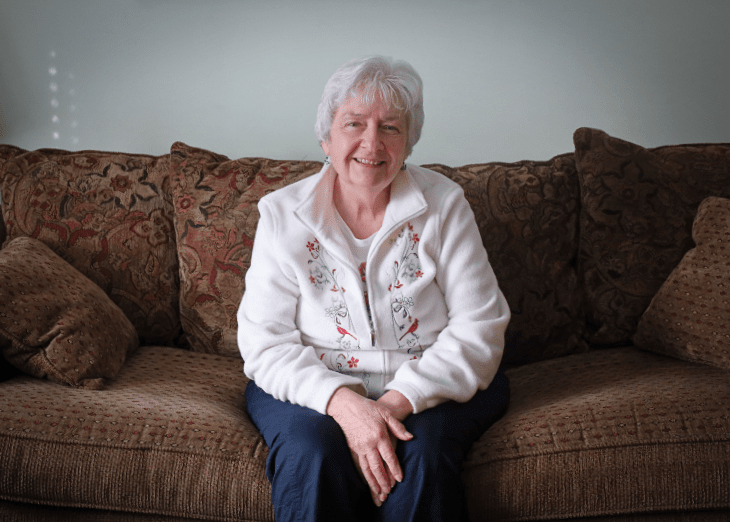
Patient Partners engaged in governance
Niagara Health’s ‘willingness to listen, to really listen – can make healthcare more human’ says Patient Partner.

IT’S ABOUT
Reimagining the Patient Experience
At Niagara Health, patient experience is more than a measure. It is how care feels to the people who depend on us most.
Over the past year, Niagara Health launched and operationalized its Reimagining Patient Experience Plan PDF, opens in new tab, creating a shared organizational approach grounded in the Six Key Elements of Patient Experience. Designed to strengthen communication, compassion, involvement and trust, the framework is helping teams across the organization embed patient-centred care into daily practice.
The impact is already being felt.
In our Emergency Departments, targeted patient experience initiatives helped drive measurable improvements in care experience. Overall patient experience scores increased from 41 per cent to 53 per cent, while patient involvement in care decisions improved from 53 per cent to 62 per cent.
These gains reflect focused, team-based strategies aligned with our operational plan, including huddles, communication training and integration of the Six Key Elements into frontline care practices.
Across the organization, Niagara Health also expanded patient feedback systems into new clinical areas including Intensive Care, Mental Health & Addictions and Ambulatory Care. Improved email collection strategies and QR-code enabled surveys increased real-time patient feedback participation from six per cent to 15 per cent, strengthening our ability to respond to patient needs.
This progress is also reflected in the voices of patients and families. Over the past year, 1,821 STARS were presented to staff, physicians and volunteers through the STAR Compliment program, more than double the 903 received the previous year, recognizing those who made a meaningful difference in care experiences.
Patient Experience also became more deeply embedded in leadership and operational discussions, supported by new data literacy tools, standardized action planning templates and regular program-level reviews of patient feedback data.
The organization further strengthened the voice of patients and families in decision-making.
This year, 19 new Patient Partners joined Niagara Health and contributed to 36 new initiatives across the organization, advancing priorities such as discharge medication information, spiritual care resources, patient education materials and transitional care planning.
At the bedside, Patient Experience rounding continued across seven inpatient units, allowing teams to proactively address concerns and connect directly with patients and families. More than 620 patients and family members participated in rounding conversations this year, while six of the seven participating units demonstrated sustained reductions in formal complaints.
Together, this work demonstrates tangible progress toward Niagara Health’s goal of creating safer, more compassionate and more connected care experiences — where patients and families feel heard, respected and involved every step of the way.
Swipe to explore →
of patients in the ED felt involved in care decisions
up from 53%real-time patient feedback participation
up from 6%new Patient Partners
onboardedSTAR compliments shared with staff, physicians and volunteers
more than double last year“All nurses and doctors gave me outstanding care. We are so fortunate to have this healthcare in Niagara. Thank you.”
Joanne, PatientSpotlight Highlights
Swipe to explore highlights →
Niagara Health’s ‘willingness to listen, to really listen – can make healthcare more human’ says Patient Partner.
For Caroline Campbell, compassion is more than a job requirement, it’s the driving force behind her career.
Niagara Health teams revived the Random Acts of Kindness challenge, performing thousands of acts that strengthened staff morale and patient care.
Read story about how teams revived the Random Acts of Kindness challenge
Programs focused on wellness, mentorship and culture continue to support the well-being of Niagara Health teams.
"We just looked at each other and said, ‘It’s our time to give back.'"
Learn how volunteers play a vital role story opens in new tab
Help patients manage chronic conditions and avoid unnecessary hospital visits.
new physicians and surgeons
Niagara Health has made real progress recruiting physicians in recent years. Learn how these hires strengthen care for our patients.
Learn more about how we are attracting the next generation of physicians
new emergency physicians and new colleagues in anesthesiology and internal medicine
IT'S ABOUT
Niagara Health's Health Equity Plan is helping build a healthcare system where every person has the opportunity to achieve their best possible health.
Through evidence-based initiatives, strong community partnerships and system-wide improvements, we are working to identify and address disparities while fostering a responsive and inclusive environment.
This year, Niagara Health advanced several key initiatives to better understand and respond to the needs of our communities. Highlights include co-leading Niagara's first regional health system capacity planning assessment, hosting the organization's inaugural Health Equity and DEI Knowledge Exchange Conference and securing funding to launch a social prescribing initiative aimed at reducing social isolation among older adults.
The organization also strengthened its foundation for future equity-focused planning through the implementation of official language preference collection and the phased introduction of sociodemographic data collection. Together, these efforts are helping Niagara Health better understand community needs, improve access to care and inform future service improvements.
By embedding health equity into quality improvement, patient experience, education and planning initiatives, Niagara Health is creating lasting change and strengthening its ability to deliver more equitable care for all communities across the region.
Spotlight Highlights
Swipe to explore highlights →

Niagara Health is participating in a new national initiative aimed at addressing social isolation and loneliness among older adults, an issue increasingly recognized as having a direct impact on health, recovery and independence.

It is important that everyone who walks through our doors feels safe, valued and above all, cared for. Our purpose of Extraordinary Caring, for every person, every time calls for us to treat one another with dignity, respect, and compassion.
Learn more about Niagara Health's commitment to diversity, equity and inclusion
IT'S ABOUT
Niagara Health continues to advance its commitment to French Language Services (FLS), with steady progress across several priority areas.
Niagara Health continues to strengthen its active offer practices, supported by staff training and awareness initiatives that emphasize the importance of identifying and responding to the needs of Francophone patients at the first point of contact. Niagara Health continues to advance its active offer of French-language services through a focused approach that reinforces staff awareness and supports timely identification and response to the needs of Francophone patients at the first point of contact.
All patients registering with Niagara Health are now asked to indicate their preferred official language. This supports timely access to appropriate services, including interpretation and marks the first phase of a broader effort to collect standardized demographic information across the organization. This work aligns with provincial direction, accreditation standards and Niagara Health’s Health Equity Plan.
Efforts to create a more inclusive and accessible environment are ongoing. Patient education materials and signage are being reviewed and translated to better meet the needs of diverse populations. At the same time, governance and accountability have been strengthened through the approval of a formal French Language Services Policy in early 2026. This policy establishes a clear framework for delivering, monitoring, and improving services in French, supported by regular tracking of performance indicators and alignment with provincial expectations.
Engagement with the Francophone community remains a priority and continues to inform service planning and delivery. Together, these efforts reflect meaningful progress toward improving equitable access to high-quality care for Francophone patients, while identifying opportunities for continued growth.
Delivering Safe and Quality Care