
Niagara Health is participating in a new national initiative aimed at addressing social isolation and loneliness among older adults, an issue increasingly recognized as having a direct impact on health, recovery and independence.
Niagara Health has been selected as one of three national demonstration sites for the Social Vital Sign Program, a multi-year, cross-sector initiative that brings hospitals and community organizations together to better identify and respond to social isolation as part of routine care.
The program is based on a simple premise: social connection matters to health. Older adults who are socially isolated are more likely to experience health decline, require hospital care and face challenges after discharge. By identifying social isolation earlier and strengthening connections to community supports, the program aims to improve care transitions and support recovery beyond the hospital setting.
“Older adults were identified as a priority population in Niagara Health’s Health Equity Plan. This initiative is an important step in putting that commitment into practice by integrating screening into care and strengthening partnerships that connect patients with community supports,” says Zainab Awad, Niagara Health’s Manager of Health Equity.
The initiative is led by Dr. Michelle Nelson through the Care in Common Living Lab, anchored at Bruyère Health Research Institute, in partnership with Niagara Health, Seniors Newfoundland and Labrador, and Newfoundland Health Services. Community and national organizations focused on aging, social prescribing and community connection are also involved.
The Social Vital Sign Program launched with $1 million in support from The Waltons Trust, with an additional $900,000 in in-kind partner contributions. Funding from The Waltons Trust is provided in memory of John and Susanne Graham.
At Niagara Health, the program will be piloted through the Geriatric Emergency Management Nurse Practitioner (GEM NP) model in the Emergency Departments. Standardized screening for social isolation will be integrated into existing clinical workflows, with clear referral pathways to community supports for older adults identified as being at risk.
The work is particularly relevant in Niagara, which has the third-highest proportion of older adults in Canada. Seniors care is a priority for Niagara Health, and the program supports the organization’s focus on improving care for older adults by strengthening coordination between hospital and community services.
In addition to its role as a national demonstration site, Niagara Health has received funding through the HIROC Collaborate Safety Grant to support local implementation. This funding will support staff education, workflow integration, quality improvement and evaluation, with a focus on patient safety and continuity of care during transitions.
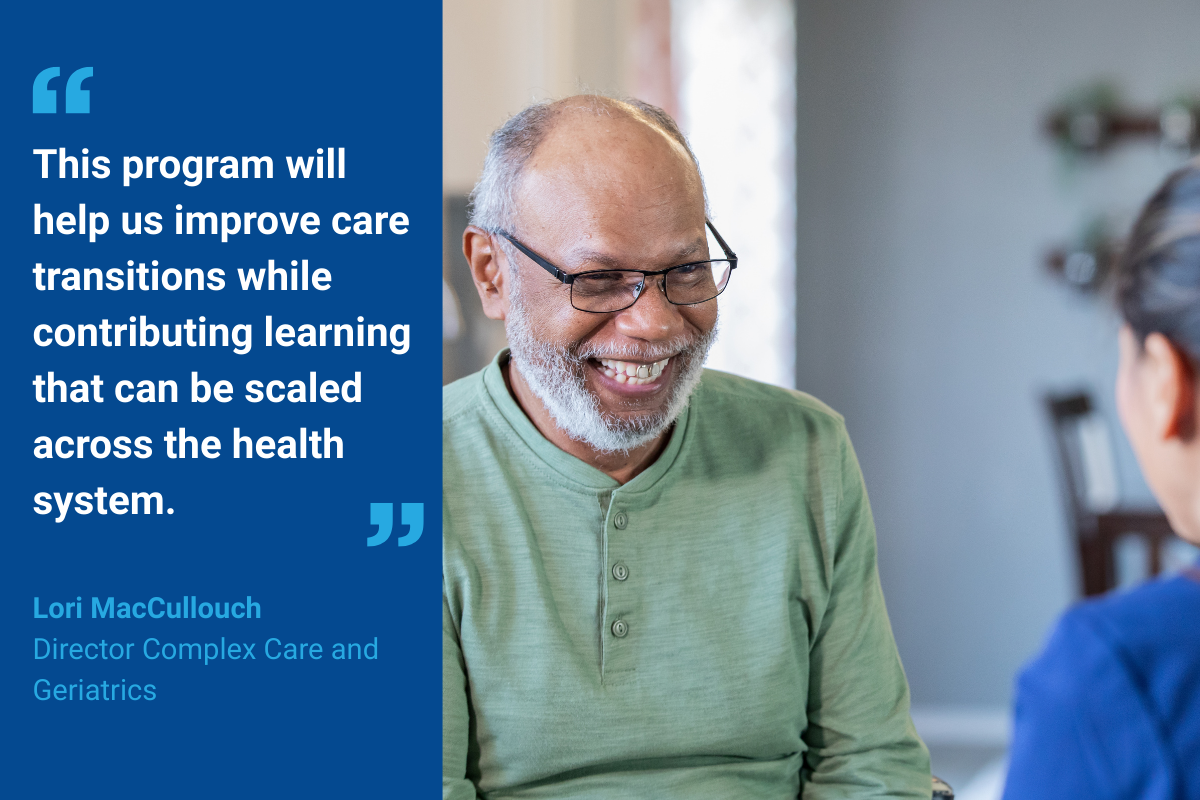
“This work reflects an important shift in how we think about care for older adults,” says Lori MacCullouch, Director Complex Care and Geriatrics at Niagara Health. “By co-designing hospital-to-community pathways with our partners, we’re recognizing that social connection plays a real role in recovery and well-being. This program will help us improve care transitions while contributing learning that can be scaled across the health system.”
The Social Vital Sign Program aligns with Niagara Health’s Health Equity Plan, Care for Older Persons Strategy and 2023–2028 Strategic Plan. By embedding social isolation screening into hospital care and strengthening partnerships beyond the hospital, Niagara Health is working to ensure older adults receive care that supports both medical needs and overall well-being.
"Our long-term vision is to fundamentally transform how health and community systems work together to address the interconnected nature of medical and social well-being," says Nelson, principal investigator of the project. "By considering social connection the same way we think about other vital signs, we create opportunities for health care and community partners to collaborate in supporting older adults' holistic health, making assessing social well-being as routine and essential as monitoring blood pressure or heart rate."
