
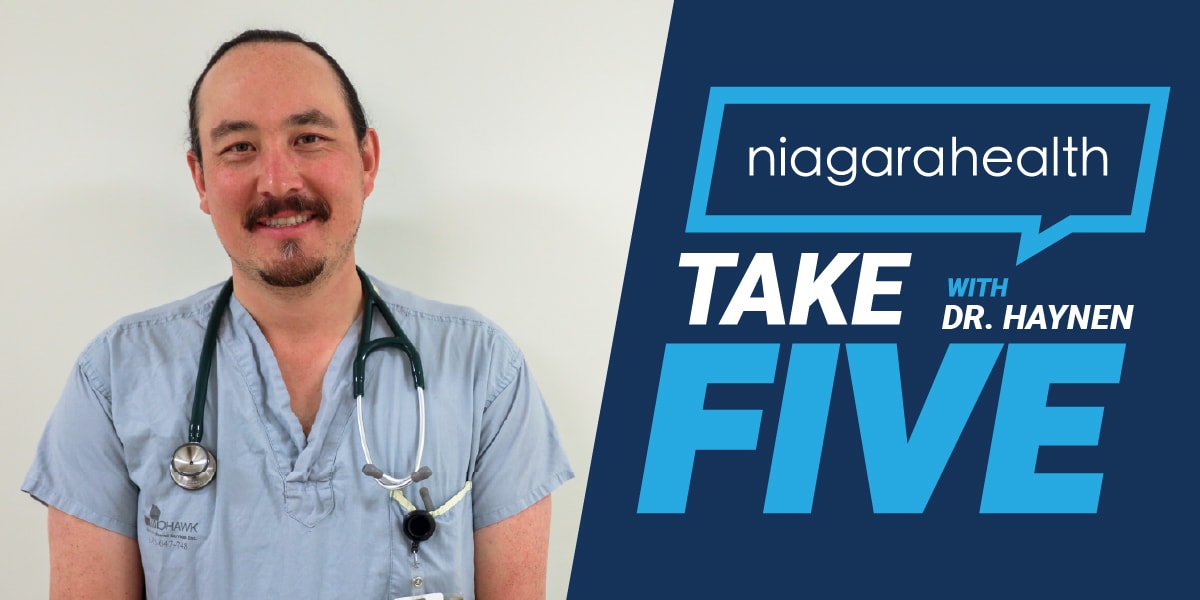
Dr. Haynen shares insights on heart failure and the importance of early recognition and treatment as part of Niagara Health's 29th Annual Cardiology Day.
Cardiologist and Medical Director of Echocardiography Laboratories, Dr. Bennett Haynen has built his career around understanding the complexities of heart failure — from how it develops to how early treatment can change lives.
Later this month, he’ll bring that expertise to Niagara Health’s 29th Annual Cardiology Day, where physicians and healthcare providers gather to share the latest evidence-based insights in cardiovascular care and strengthen collaboration across specialties.
Ahead of his session, Reduced and Nonreduced Ejection Fraction: An Update on Congestive Heart Failure, Dr. Haynen reflects on the experiences that shaped his path in medicine and the importance of recognizing heart failure early.
Q: Who inspired you to pursue a career in cardiology?
A: During medical school, I was fortunate to spend my summers conducting research under the supervision of a cardiologist. She taught me how to interpret electrocardiograms (ECGs), brought me into the catheterization laboratory where coronary angiography is performed, and allowed me to see patients with her in the Cardiac Intensive Care Unit. These formative experiences sparked my interest in the field and ultimately inspired me to pursue a career in cardiology.
Q: What is congestive heart failure, and what does “ejection fraction” mean in simple terms?
A: Congestive heart failure is a condition in which the heart is unable to pump enough blood to meet the body’s needs. When this happens, fluid can back up into the lungs and/or the legs.
The heart functions as a pump, and ejection fraction refers to the percentage of blood the heart pumps out to the body with each heartbeat. A normal ejection fraction is typically between 55 and 65 per cent.
Q: Where does heart failure care usually take place — is it managed mostly in hospital, or in the community as well?
A: Heart failure care can take place in both settings. Patients who are acutely unwell may require treatment in hospital, where closer monitoring and management are needed. Ongoing care is also provided through our Heart Function Clinic at the Marotta Family Hospital, as well as through cardiology clinics in the community.
Q: When should someone with heart failure seek medical attention or talk to their doctor about new or worsening symptoms?
A: The sooner a patient notifies a healthcare provider about new or worsening symptoms, the sooner we can intervene and help address those concerns before they become more serious.
Q: Why is it so important to recognize and treat heart failure early?
A: We now have a range of medical therapies that have been shown to reduce mortality and lower rates of hospitalization for heart failure. Early recognition and treatment help patients live longer, feel better, and spend more time at home with their families. .
To learn more about Niagara Health's 29th Annual Cardiology Day on Feb. 25, please contact Amanda.Etherington@niagarahealth.on.ca.
Due to limited capacity and CME accreditation requirements, priority for in-person attendance for this event will be for physicians and clinical staff.
There is unlimited capacity for virtual attendance for verified health care professionals.
