
This is an opinion column by Niagara Health Chief of Medicine Dr. Lorraine Jensen and Lisa Hildebrand, Director of the Regional Stroke Program, originally published in the Niagara dailies.
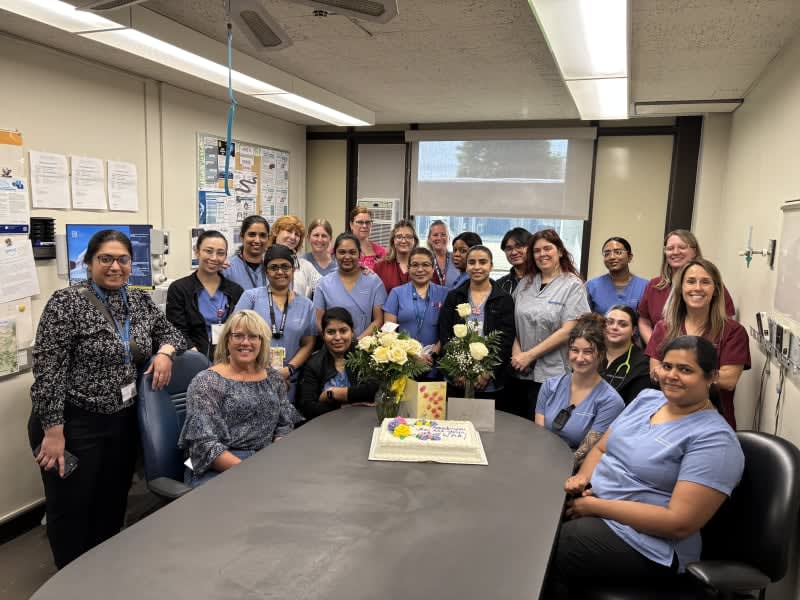
Members of Niagara Health's stroke care team in 2025 after earning Accreditation Canada's Stroke Distinction Award.
When it comes to stroke care, minutes matter.
For every minute treatment is delayed, an estimated 1.9 million neurons are lost. Each minute saved can mean days of healthy life regained.
The ‘Fewer Strokes, Better Outcomes’ mission of the Central South Stroke Network and Niagara Falls Hospital shapes how stroke care is delivered in Niagara today and where it needs to go next.
At Niagara Health, we are building toward a Centre of Excellence in Stroke at the new South Niagara Hospital when it opens in 2028. That work is already well underway.
In 2025, Niagara Falls Hospital earned Accreditation Canada’s Stroke Distinction Award, meeting every national standard for stroke care and exceeding key quality targets, including faster treatment times and higher rates of patients cared for in a dedicated stroke unit.
The designation reflects high-quality care across the stroke journey, from emergency to rehabilitation and return to the community.
That recognition is grounded in how care is organized.
Stroke patients in Niagara, who call 911 and meet defined criteria, are brought to Niagara Falls Hospital, where specialized teams, neurologists and stroke-trained nurses and nurse practitioners are ready to respond. It’s a model built on a simple idea - patients do better when the right expertise and equipment are in one place, working together.
This approach depends on strong partnerships. Niagara EMS plays a critical role in recognizing signs and symptoms of stroke early and getting patients to care quickly. From there, care is coordinated across a broader network, including advanced treatment at Hamilton Health Sciences and rehabilitation and outpatient care through partners like Hotel Dieu Shaver Health and Rehabilitation Centre.
Stroke care is not one moment in time. It is a system.
Stroke care starts well before a patient arrives at the hospital. Many strokes are preventable through better management of risk factors and healthier lifestyles. Public awareness of stroke symptoms and the need to call 911 remains critical. Reducing the number of strokes in the first place is an essential part of improving outcomes across the system.
Across Ontario, there is still significant variation in how quickly patients receive treatment. Provincial data shows delays in both initial treatment and transfers for advanced care.
Niagara Health is actively working to reduce those delays. We are participating in a provincial improvement collaborative focused on door-to-needle and transfer times, using data, peer learning and continuous improvement to deliver faster, more reliable care.
The impact is clear. Patients are moving through a more coordinated system in Niagara. More patients are recovering and returning home.
Stroke volumes at Niagara Health have increased significantly over the past five years, with admissions rising from 430 to 685, underscoring the need for strong coordination across hospital and community care. At the same time, we’re caring for more patients, including younger people with complex needs. That makes timely, consistent care even more important.
We know there is more to do. Care does not end at discharge. Access to outpatient rehabilitation and community supports remains a challenge across the system. In some cases, patients stay in hospital longer than needed because the right next step in care is not available. Addressing those gaps is part of what comes next.
The new South Niagara Hospital will expand and strengthen stroke care in Niagara. Plans include a larger, dedicated stroke unit, growing from 24 beds today to 36, along with outpatient stroke services and closer integration across the full continuum of care.
It also supports our growing role in research. Niagara Health is participating in clinical studies and provincial initiatives through the Niagara Health Knowledge Institute, helping to improve stroke care in community hospital settings and bring new approaches to patients closer to home.
This is how a centre of excellence is built. Not in a single moment, but over time, by aligning people, partners and processes around a shared goal: faster treatment, better outcomes and a system that works as one.
