
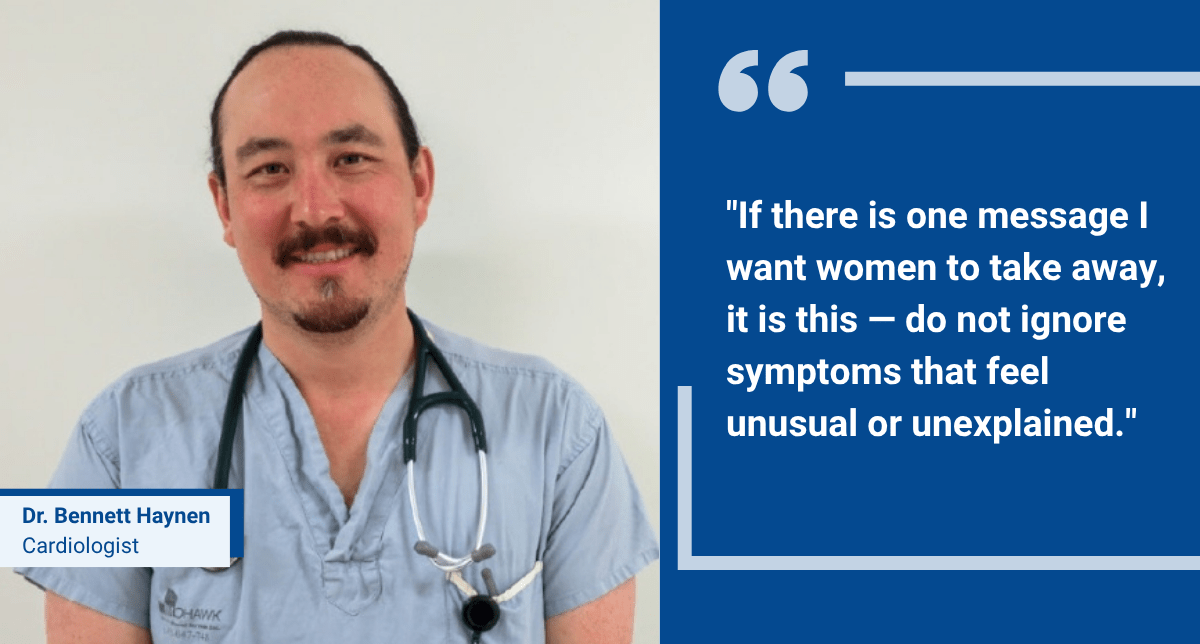
This is an opinion column by Dr. Bennett Haynen, a cardiologist at Niagara Health, originally published in the Niagara dailies.
I still remember one of my early experiences in medical school, working alongside a cardiologist in a busy hospital. I had the chance to follow patients, spend time in the cath lab and see what happens when someone comes in with a serious heart problem.
What stood out right away was how often we could make a real difference.
In cardiology, patients can arrive very unwell, sometimes without warning. But in many cases, we can step in and change the outcome. A blocked artery can be opened. Blood flow can be restored. Someone who might have faced a life-altering event can recover and return to their everyday life.
That ability to intervene in a meaningful way is what drew me to cardiology. It is also why conversations about heart disease matter so much, especially when it comes to women.
Heart disease is still often seen as a men’s health issue. But that is not the reality. For women, particularly later in life, heart disease is one of the most serious health risks. At the same time, it is often less recognized and sometimes missed in its early stages.
Part of the reason is that symptoms in women do not always look the way people expect.
When most people think about a heart attack, they imagine sudden, severe chest pain. That does happen, but women often present differently.
"Heart disease is still often seen as a men’s health issue. But that is not the reality. For women, particularly later in life, heart disease is one of the most serious health risks. At the same time, it is often less recognized and sometimes missed in its early stages."
Symptoms can include neck pain, shoulder or upper back discomfort, or a burning feeling in the chest or abdomen. Sometimes the symptoms come on with activity and improve with rest. In other cases, it may just be a sense that something is not right.
These differences can lead people to dismiss symptoms or attribute them to something else, like muscle strain or indigestion. That can delay care, and in cardiology, timing matters. The longer the heart muscle goes without enough blood flow, the more damage can occur.
"If there is one message I want women to take away, it is this — do not ignore symptoms that feel unusual or unexplained."
We often say: time is muscle.
That is why awareness is so important. If there is one message I want women to take away, it is this — do not ignore symptoms that feel unusual or unexplained.
Here are a few practical things to keep in mind:
- Pay attention to symptoms that come on with activity and ease with rest, or that don’t have a clear explanation.
- Don’t dismiss signs like neck pain, shoulder pain, back discomfort, or burning chest or abdominal pain.
- Trust your instincts — if something feels off, it’s worth getting checked.
- Stay active so you can recognize when something changes in your body.
- Aim for a balanced, sustainable way of eating, such as a Mediterranean-style diet.
- Talk to your doctor about any new or changing symptoms, even if they seem minor.
At Niagara Health, when someone does come in with a potential heart issue, there are clear pathways to assess and treat them. In our Heart Investigation Unit, we perform tests to look at the arteries of the heart and determine whether there are blockages. If there are, we can often treat them right away using procedures that restore blood flow.
We also care for patients with heart rhythm issues, including those who need pacemakers. These are often straightforward interventions that can prevent serious complications and help people return to their normal routines.
But the reality is that the earlier we see someone, the more we can do.
Heart disease in women does not always follow the pattern people expect. That means awareness must be higher, not lower. Paying attention to symptoms, recognizing when something has changed and seeking care early can make a real difference.
Because the most rewarding part of cardiology is not just treating disease, it is seeing patients recover and get back to their lives.
"The most rewarding part of cardiology is not just treating disease, it is seeing patients recover and get back to their lives.
