
This is an opinion column by Micaela Grant, a communications and engagement specialist, originally published in the Niagara dailies.
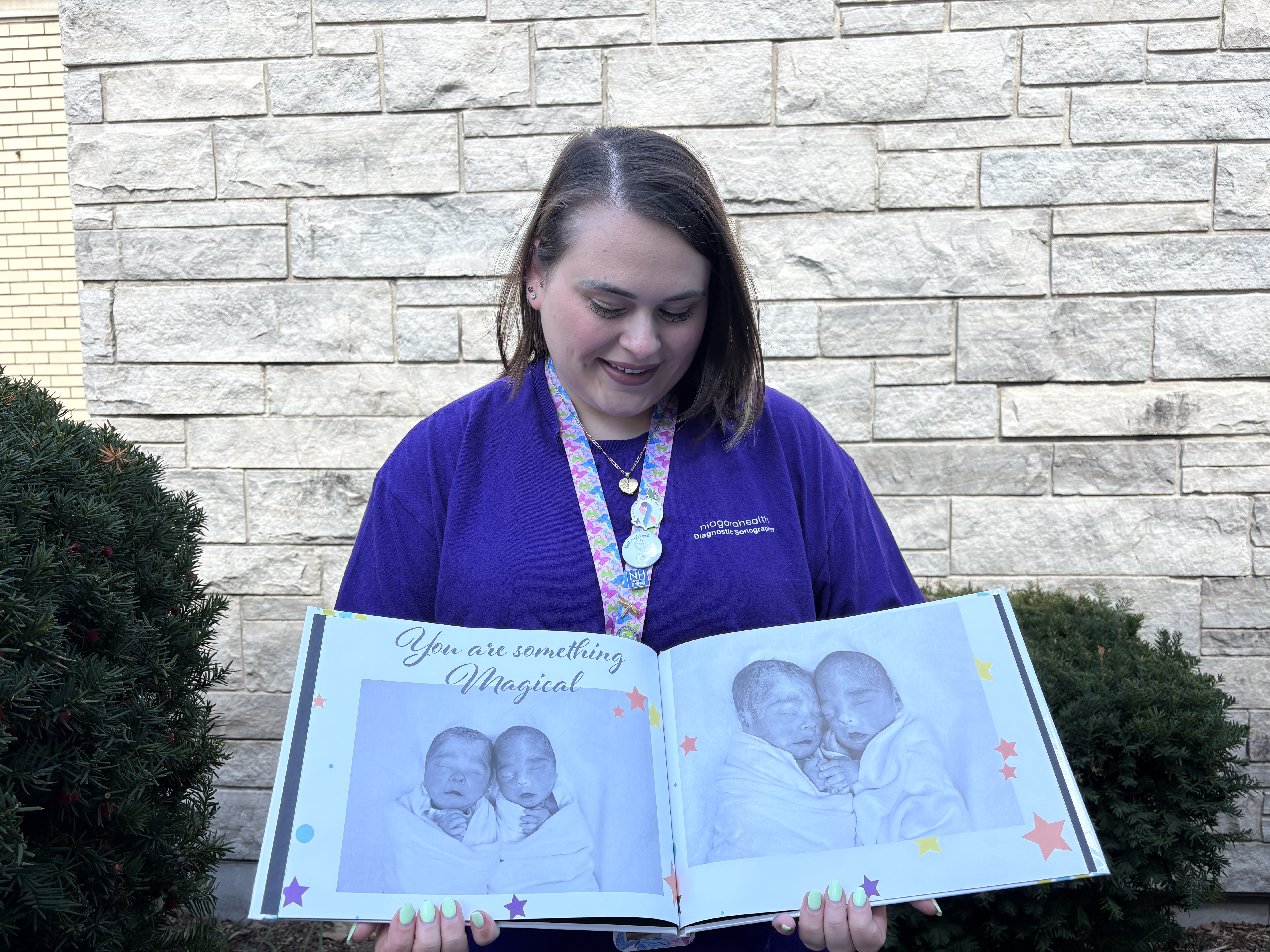
Niagara Health cardiac sonographer Chelsea Saieva-Carr holds a memory book filled with photographs of her twin sons. Ryder and River died shortly after their birth in December 2022.
For nearly six weeks, Chelsea Saieva-Carr lived suspended between hope and heartbreak.
Hospitalized after her water broke at just 22 weeks pregnant, the Niagara Health cardiac sonographer spent each day hoping her twin boys would stay where they were safest. She celebrated every milestone and every additional day that gave them a better chance at survival.
When Ryder and River arrived in late 2022 at 28 weeks gestation, Saieva-Carr and her husband finally got to meet the sons they had fought so hard for.
Just days later, they had to say goodbye.
Today, nearly four years later, Ryder and River remain part of everyday life in the Saieva-Carr household.
Their photos are displayed proudly, their birthdays are celebrated and their little sister Mylah, who turns two later this year, knows their names.
October is Pregnancy and Infant Loss Awareness Month. Saieva-Carr is sharing her family’s story in hopes that other parents carrying similar grief know they are not alone.
“I wanted to share my experience because this is more common than people think, but people rarely talk about it,” she said. “If my story helps even one person feel less alone, then it’s worth sharing.”
Saieva-Carr’s journey to motherhood was marked by loss before her twins were even conceived. After experiencing a miscarriage, she was overjoyed to learn a few months later that she was pregnant with twin boys.
“I always dreamed of having twins,” she said. “When we found out there were two little boys, it felt like all of our dreams were coming true.”
The pregnancy progressed normally until specialists at McMaster Children’s Hospital discovered she had suddenly lost all the amniotic fluid surrounding the babies.
Saieva-Carr was closely monitored. When her water broke at 22 weeks, she was admitted to hospital. For more than six weeks, she remained there as doctors worked to prolong the pregnancy.
The twins were born on Dec. 16.
Ryder passed away unexpectedly in his mother’s arms 13-and-a-half hours later.
“We were grieving the loss of Ryder, but we were still holding onto hope for River,” said Saieva-Carr. “We were holding on to every possibility and exhausting every option we could for him.”
Two days later, after every possible intervention had been exhausted, River also died in his parents’ arms.
Before saying goodbye, the Neonatal Intensive Care Unit (NICU) team gave Saieva-Carr and her husband Tim Carr, a priceless gift: time.
“NICU staff allowed us to hold River for two hours,” she recalls. “We read him a book, sang to him and took in every moment before we had to turn off the ventilator.”
The moments were heartbreakingly brief, but she cherishes memories like holding them, telling them they were loved and the feel of their tiny hands and feet.
“Those moments meant everything,” she said.
The physical recovery from an emergency caesarean section was painful. The emotional recovery felt nearly impossible.
“My days were dark,” she said. “I felt stuck in a never-ending cycle of guilt, pain and a broken heart that could not be mended.”
She struggled with panic attacks, anxiety and post-traumatic stress. Leaving the house felt overwhelming. Returning to work at Niagara Health brought a new set of challenges as the sounds of alarms, ventilators and emergency situations triggered memories of her time in the NICU.
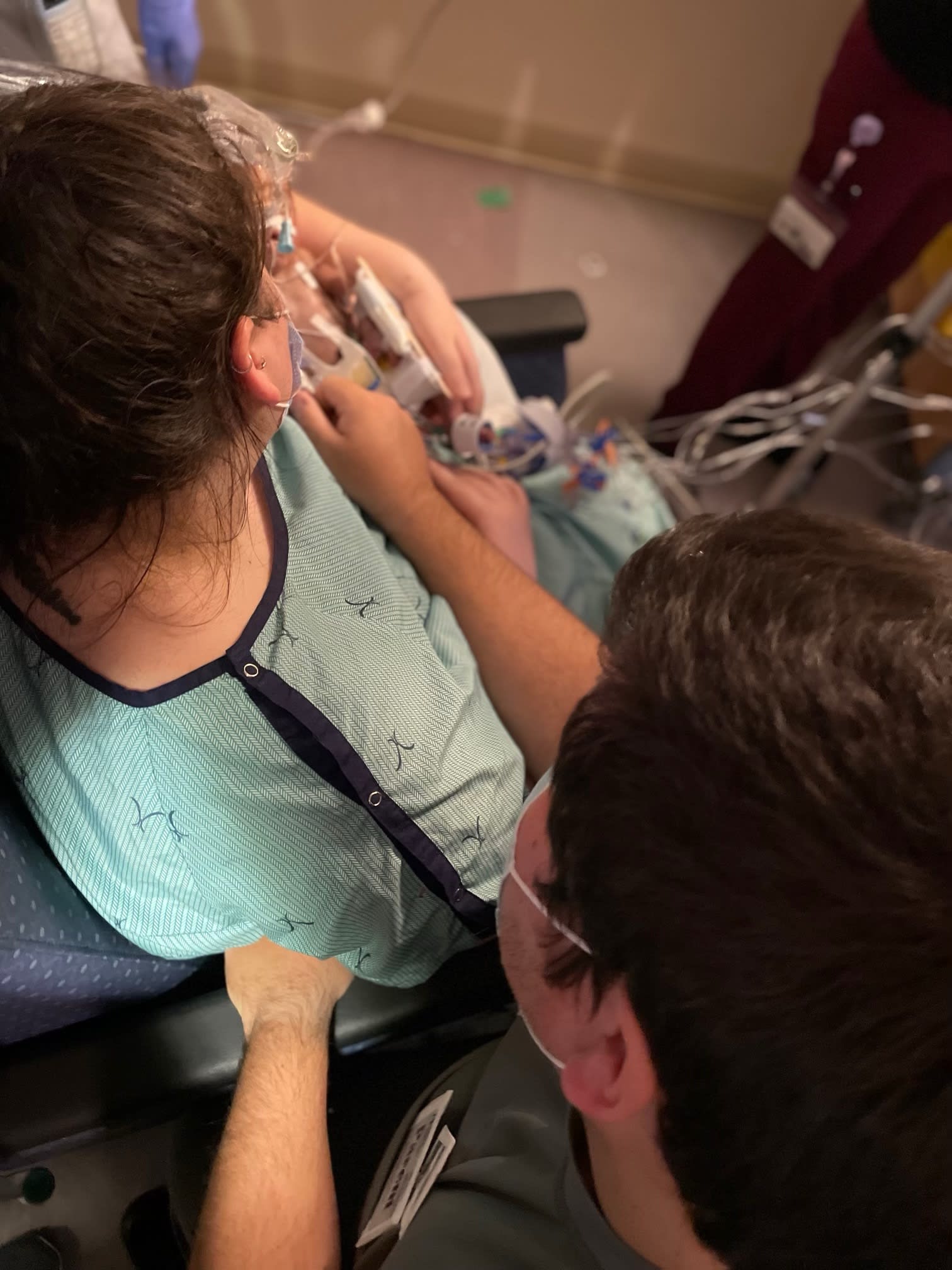
Chelsea Saieva-Carr holds River in the NICU during one of the precious moments she shared with her son before saying goodbye.
“My husband took months off work unpaid to take care of me while dealing with his own grief,” she said. “Without my husband, parents and Nonna, I don’t know where I would be today.”
Counselling through the Pregnancy and Infant Loss Network also connected Saieva-Carr with other bereaved parents who understood what she was going through.
Then came Luna.
The tiny dog entered the family’s life at a time when grief threatened to consume it, giving her a reason to get out of bed, go for walks and reconnect with the world.
When Luna passed away just shy of her second birthday, the loss reopened old wounds. But the family found comfort in imagining a different reunion.
“To this day, we believe Luna was sent to help me through my grief,” said Saieva-Carr. “When she passed, we felt like the boys wanted to meet her in heaven.”
While grief has remained a constant companion, Saieva-Carr has found meaningful ways to ensure Ryder and River are never forgotten.
Every December, family and friends gather to celebrate the boys’ birthday.
Among Saieva-Carr’s most treasured memories of her sons is something simple: stroking their hair while holding them in her arms.

Tim Carr and Chelsea Saieva-Carr hold Luna, the beloved dog who helped them through their grief after the loss of their twin sons.
“I remember playing with their hair and just wanting to hold onto every piece of them that I could,” she said.
That memory eventually inspired Angel Locks by: Ryder and River, a keepsake she created in honour of her sons.
Designed to preserve a baby’s lock of hair, the keepsakes provide bereaved families with something tangible to hold onto in memory of their baby.
Since 2023, Saieva-Carr has donated hundreds of Angel Locks by: Ryder and River keepsakes to McMaster Children’s Hospital, where they are included in memory boxes given to families experiencing the loss of a baby.
“When you lose a child, you’re desperate to hold onto every piece of them,” she said. “If this brings even a little bit of comfort to another family, then that’s what matters.”
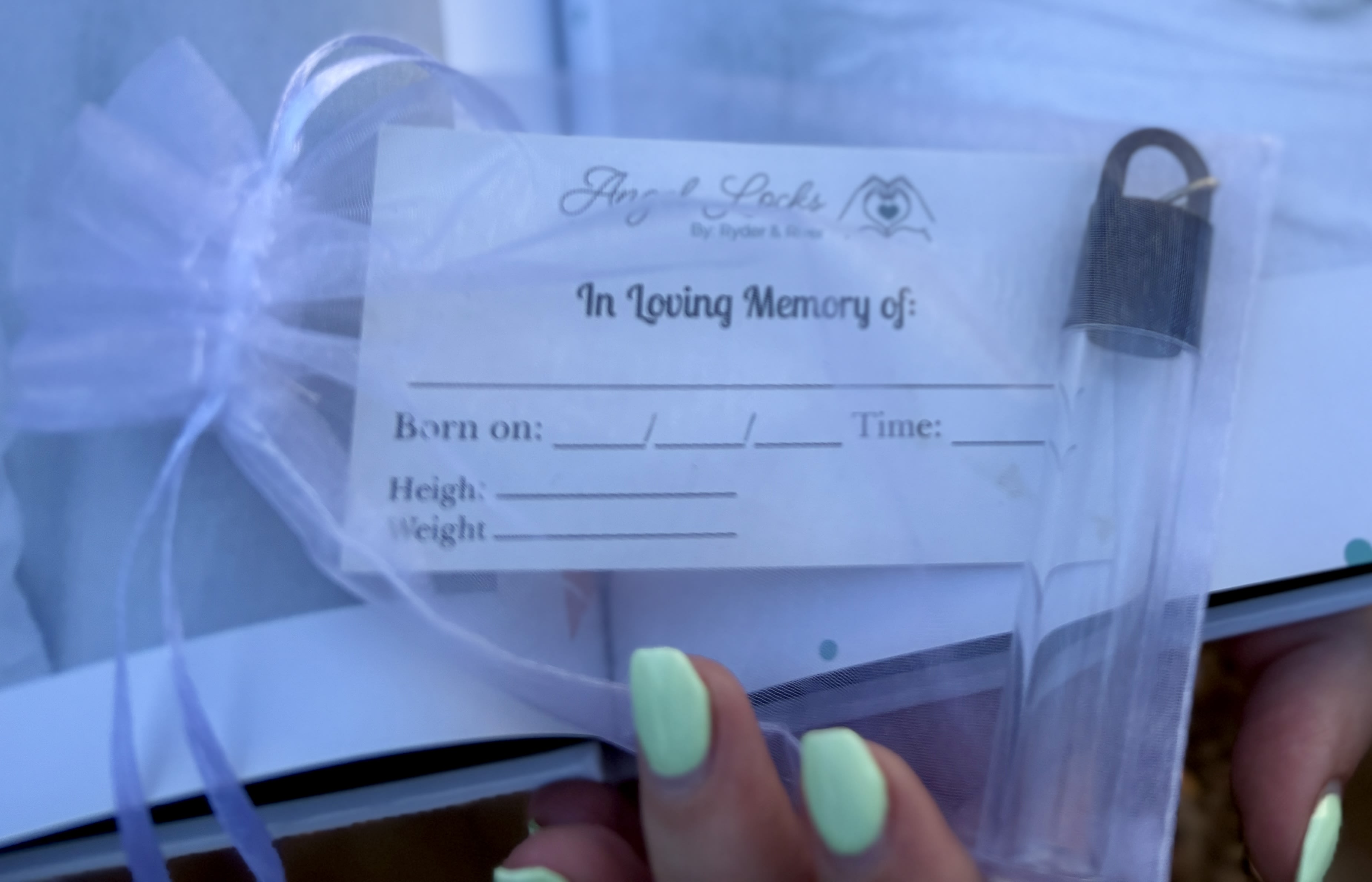
A lock from Angel Locks by: Ryder and River. Chelsea Saieva-Carr created the non-profit in memory of her twin sons. The keepsakes are designed to preserve a baby’s lock of hair and provide families with a lasting reminder of their child.
While every family’s experience is unique, the need for compassion, understanding and open dialogue is universal.
“Pregnancy and infant loss can be an incredibly isolating experience for families,” said Dr. Karen Macmillan, chief of obstetrics and gynecology at Niagara Health.
“Many parents carry their grief quietly because they feel others don’t understand what they’re going through. By talking openly about pregnancy and infant loss, we can help families feel seen, supported and less alone in their journey.”
Pregnancy and Infant Loss Awareness Month is recognized each October. And Oct. 15 marks International Wave of Light, a commemorative event when families around the world light candles in memory of babies lost during pregnancy, stillbirth or infancy.
Saieva-Carr hopes her story encourages more open conversations about pregnancy and infant loss.
“We should be able to live in a time where we’re not afraid to talk about pregnancy and infant loss,” she said.
