
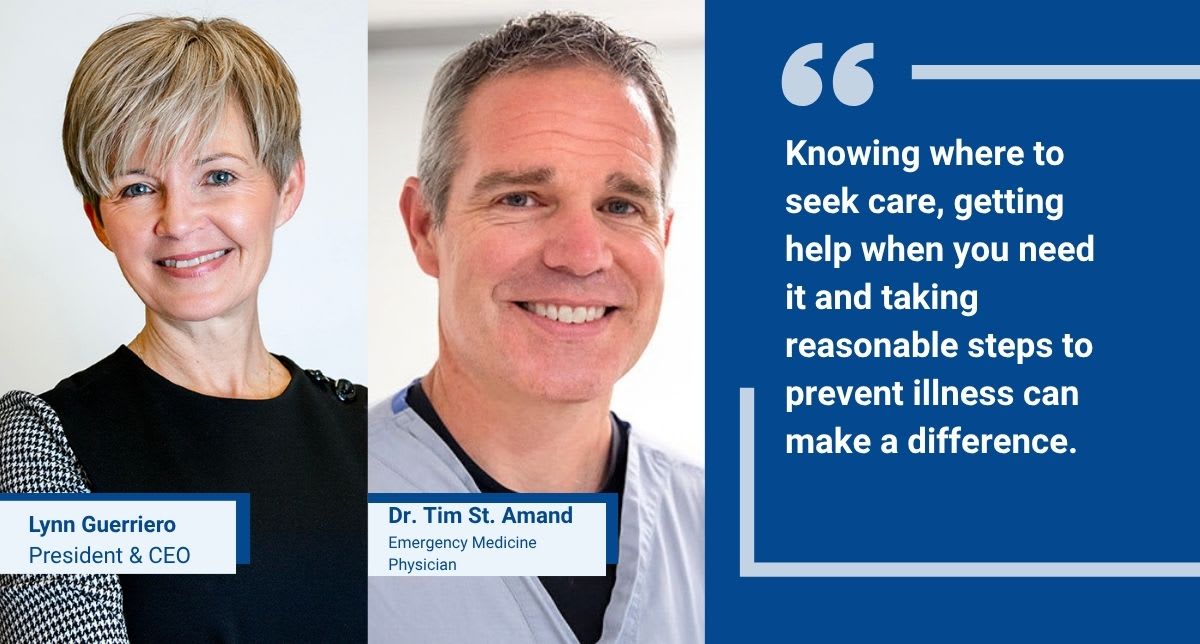
This is an opinion column by Lynn Guerriero, President and CEO of Niagara Health, and Dr. Tim St. Amand, Emergency Medicine Physician, originally published in the Niagara dailies.
If you have spent any time in a hospital emergency department during fall or winter, you know the scene. A busy waiting room, people coughing and feeling miserable and staff moving from one patient to the next.
That is not unusual for this time of year. Every fall and winter, influenza, RSV (respiratory syncytial virus) and COVID-19 begin circulating more widely, and hospitals across Niagara see more patients.
For most people, these illnesses run their course without the need for hospital care. But for older adults, babies and people with underlying health conditions, a respiratory infection can become much more serious.
At Niagara Health, preparing for that increase starts well before the first wave of flu arrives. Teams plan staffing, monitor hospital capacity, work with community health-care providers and look at how patients move through the system.
There is something residents can do, too — know where to go for care before you need it.
If you are having chest pain, trouble breathing, symptoms of a stroke, a serious injury, loss of consciousness, a serious mental health crisis or another medical emergency, call 911 or go to the nearest emergency department (ED). Don’t wait because you are worried about how busy the hospital might be.
Emergency physicians would rather assess someone with a serious medical problem right away than have that person stay home or delay care because they are concerned about wait times.
The ED is there for emergencies. But there are many health concerns that can be treated elsewhere.
A sore throat, mild fever, minor sprain, medication question, persistent cough or ear infection may be better suited to a family doctor, walk-in clinic, nurse practitioner clinic, pharmacist or virtual care centre.
That doesn’t mean people should avoid the emergency. It means there are different places within the system that can provide different kinds of care.
There is another reason this matters, and it’s one patients don’t always see when waiting in an emergency room.
An ED can become crowded even when the number of people arriving at the front door has not changed dramatically.
The reason is often the hospital beds behind it.
When someone comes to emergency and needs to be admitted, but there isn’t an in-patient bed available, that patient may remain in the ED while waiting. They still need nursing care, medications, tests and monitoring. Meanwhile, new patients continue to arrive.
That can create a bottleneck. Pressure in the ED is connected to what is happening throughout the hospital.
Patient flow is therefore a big part of preparing for respiratory illness season.
Every day, Niagara Health teams work to discharge patients safely when they are ready to leave, co-ordinate transfers between hospital sites and connect patients with community services they need after leaving hospital. Much of that work is invisible to the public but affects how quickly beds become available for the next patient .
Respiratory illness season can make that harder. Patients admitted with influenza, RSV and other respiratory infections may need more care and may stay in hospital longer. The effects can continue even after the number of people getting sick starts to fall.
There are also things we can do before anyone needs a hospital.
Stay up to date with recommended vaccinations. Wash your hands. Cover coughs and sneezes. If you’re sick, stay home when you can. If you have symptoms or are going into a crowded indoor setting, consider a mask.
None of these steps guarantees you won’t get sick. But they can reduce the spread of respiratory illnesses and help protect people who are more likely to become seriously ill.
Winter will bring respiratory illnesses. That part is predictable.
What matters is how we respond .
Knowing where to seek care, getting help when you need it and taking reasonable steps to prevent illness can make a difference.
