
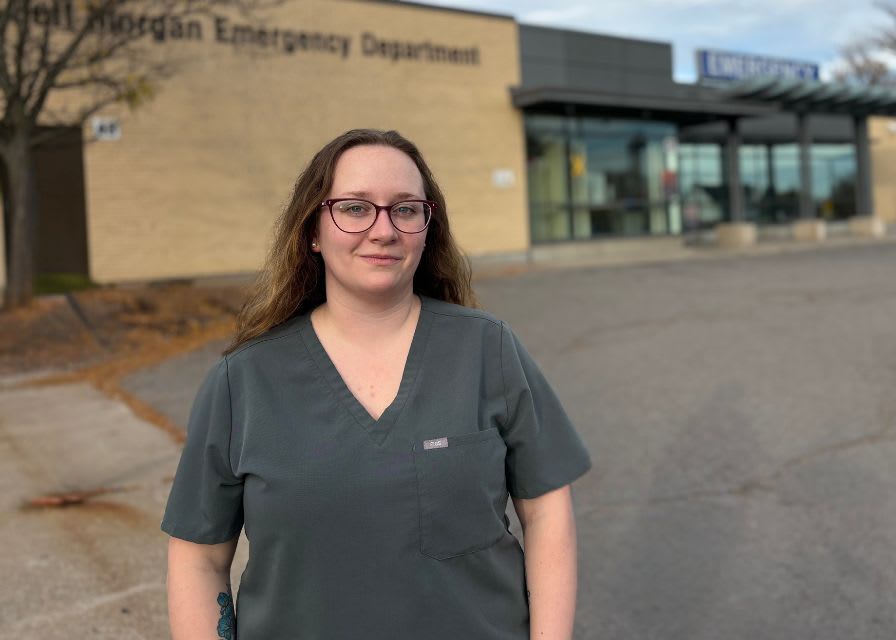
Ashley Kehoe, Nurse Practitioner in the Niagara Falls Emergency Department assess patients shortly after they arrive to the ED, helping alleviate increasing patient volumes, long wait times and challenges accessing timely care.
Patients visiting Niagara Health’s Niagara Falls Emergency Department are getting care sooner thanks to a model that brings Nurse Practitioners into the early stages of a patient’s visit.
Introduced at Niagara Falls Hospital earlier this year following successful implementation at the Welland and Marotta Family hospitals, the role allows Nurse Practitioner’s to assess, order tests, begin treatment and answer questions while the patient waits to see a physician.
"We introduced this role to help address increasing patient volumes, long wait times and challenges accessing timely care," says Brandy Hillyard, Manager of the Niagara Falls Emergency Department. "Having an NP involved early means patients aren't waiting as long for that first conversation about their care, and we're already seeing the positive impact that can have for both patients and staff."
Since the role was launched this summer, the Niagara Falls ED has seen encouraging improvements in access to care, including shorter waits to see a clinician, reduced lengths of stay for some patients and a significant decrease in the number of people leaving before being seen by a clinician, an important measure of patient safety.
"We saw patients being seen sooner and getting the care they needed earlier, while our physicians and frontline teams were better able to manage busy periods," says Hillyard. "The difference benefits both patients and staff and its success showed us this model could have a positive impact in Niagara Falls as well."
NPs are registered nurses with extensive additional training who work alongside physicians, nurses and other healthcare professionals to help patients start receiving care sooner.
"As a Nurse Practitioner, I can assess patients shortly after they arrive, order tests, start treatments for symptoms like pain or nausea, and follow up on results while they wait to see a physician," says Ashley Kehoe, NP in the Niagara Falls ED. "That allows us to identify serious concerns sooner and help move care forward earlier in the visit."
For many patients, that early interaction provides reassurance during what can be a stressful experience.
"Many people arrive feeling anxious, vulnerable or uncertain about what's happening," says Kehoe. "We can answer questions, explain what to expect and help patients better understand their hospital journey."
NPs also help keep a close watch on patients in the waiting room, working with nursing staff to identify anyone whose condition may be changing.
"We're another set of eyes watching over patients between triage and physician assessment," says Kehoe. "That helps us recognize when someone's condition is changing and ensure they receive the attention they need."
Hillyard says the role has become an important part of how the ED responds to growing demand for care.
"What makes this model work is the way it brings our care teams together," she says. "NPs work closely with physicians, nurses and other healthcare professionals to help make sure patients get the care they need, when they need it."
For Kehoe, the value of the role comes down to helping patients feel cared for from the moment they arrive.
"When patients know someone is listening to their concerns and helping move their care forward, it can make a real difference in their experience," she says. "That's what this role is all about."
