
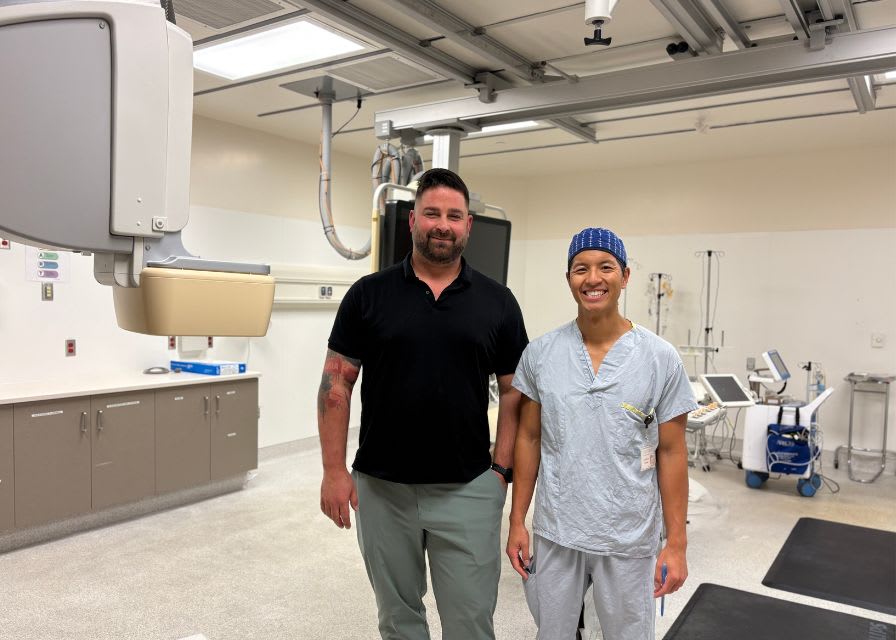
Matthew Baronaitis, Clinical Manager, Cardiology (left) and Dr. Nigel Tan, Cardiac Electrophysiologist say benefits of the new ICD program extend well beyond the implantation itself.
Specialized cardiac care is now closer to home for Niagara residents with the launch of a new Implantable Cardioverter Defibrillator (ICD) program at Niagara Health.
Since its launch in October, the ICD program has reduced the need for patients to leave Niagara for care, with eligible patients now receiving this specialized procedure closer to home.
For patients living with certain heart conditions, an ICD can be lifesaving. The small device is implanted under the skin and continuously monitors the heart's rhythm. If it detects a dangerous or life-threatening abnormal rhythm, it can quickly deliver therapy to restore a normal heartbeat.
“ICD therapy is essential for patients at risk, or who have already experienced a life-threatening arrhythmia,” says Dr. Nigel Tan, Cardiac Electrophysiologist at Niagara Health. "It constantly monitors the heart and responds within seconds when a life-threatening heart rhythm occurs. For many patients, it provides peace of mind, knowing they have an added layer of protection every day."
ICDs may be recommended for patients who have had a cardiac arrest in the past or who are at increased risk of one because of a weakened heart or an inherited heart condition.
Until now, Niagara patients requiring an ICD had to travel outside the region, most often to Hamilton General Hospital, for the procedure. While the trip may seem manageable, it can add stress and logistical challenges for patients already coping with a serious cardiac condition.
"Receiving care close to home has a real impact on the patient experience," says Matthew Baronaitis, Clinical Manager, Cardiology. "It means less travel, less disruption for patients and their families, and easier access to the care and support they need before and after the procedure."
The benefits extend well beyond the implantation itself.
Patients with ICDs require ongoing follow-up care, including regular device monitoring and appointments with their cardiac team. Having the procedure and follow-up care available through Niagara Health helps create a more seamless experience while strengthening continuity of care.
"When patients can receive their procedure and ongoing care from the same team, close to home, it helps build trust and consistency throughout their healthcare journey," says Dr. Tan. "Defibrillators require lifelong follow-up after being implanted. By offering local implant and device clinic care, we are able to follow patients over time, answer questions, monitor their progress and provide ongoing support.”
For many patients, the device can make the difference between life and death.
"If a patient's heart suddenly begins beating in a dangerous rhythm, the ICD can recognize the problem immediately and deliver treatment," says Baronaitis. "That's why these devices are so important. They provide protection when every second matters."
Launching the ICD program required significant planning, training and collaboration among Niagara Health's cardiology, Heart Investigation Unit and diagnostic teams. The addition of the service reflects Niagara Health's continued commitment to expanding the range of specialized cardiac care available in the region.
"This is another important milestone for cardiac care in Niagara," says Dr. Tan. "Every time we're able to introduce a new service locally, we're improving access for patients and reducing the need to travel outside the region for care."
The ICD program is part of a broader transformation of cardiac services at Niagara Health.
Earlier this year, Niagara Health opened a new state-of-the-art angiography suite in the Heart Investigation Unit at the Marotta Family Hospital. Equipped with advanced imaging technology, the suite allows physicians to perform a wider range of diagnostic and interventional cardiac procedures and supports more complex treatments closer to home.
Niagara Health has also become part of a groundbreaking advancement in heart transplantation through the Trillium Gift of Life Network's TransMedics Organ Care System, commonly known as "heart-in-a-box" technology. The innovative system keeps donor hearts beating outside the body during transport, helping expand the donor pool and providing more patients with access to life-saving transplants.
Together, these advancements are helping build a stronger, more comprehensive cardiac program for Niagara residents.
"Our cardiac teams are continually building on their expertise to deliver more specialized care locally," says Baronaitis. "This program is another example of what's possible when skilled clinicians, nurses and support teams work together with a shared focus on improving patient care."
