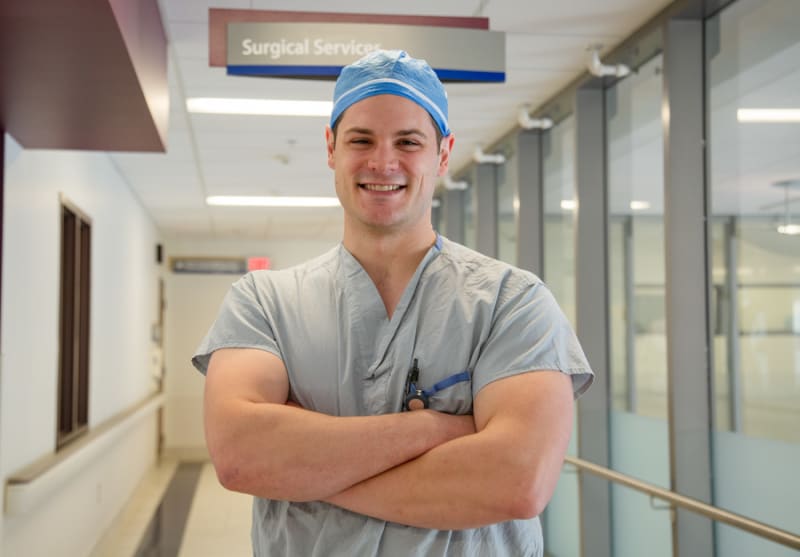
Award-winning anesthesiologist turns solitary work into collaborative success
As an anesthesiologist, Dr. Amir Abrishami typically works alone, but his colleagues and students teamed up to have him recognized with a prestigious teaching award.
Share This Page
As an anesthesiologist, Dr. Amir Abrishami typically works alone, but his colleagues and students teamed up to have him recognized with a prestigious teaching award.
Paul Brady didn't hesitate when the opportunity arose to participate in a global study exploring whether a particular blood thinner can reduce overall stroke risk in patients with atrial fibrillation and a history of brain bleeding, without increasing the chance of re-bleeding.
As he finishes his in-class component of his medical degree and moves into rotations, Grant Sweeny reflects on his journey and embraces what’s ahead.
In Niagara, where our population continues to grow and diversify, this reflection of diversity in healthcare is essential. Representation and a culturally sensitive approach in all areas of healthcare are not just ideals — they are vital drivers of trust, access and better health outcomes.
Dr. Tim St. Amand knows change can be challenging. The largest technological transformation in Niagara Health’s history is no exception for the Emergency Department Site Lead at the Marotta Family Hospital in St. Catharines.
Amr Almasri and Keira Parr each took unconventional paths to get into the Michael G. DeGroote School of Medicine – Niagara Regional Campus. They’re ready to bring their own special experiences to healthcare, the classroom and even a few taste buds along the way.
Whether it’s groundbreaking research or establishing faster, more efficient patient care, the work of Leanne Kent and Dr. Danielle de Sa Boasquevisque offers new hope for stroke patients in Niagara and beyond.
This week is Canadian Critical Care Week. Learn how critical care physician Dr. Natasha Ovtcharenko supports patients and families during challenging times.
Stroll through the toy section of any dollar or department store and you’re likely to see them: wiggly, jiggly, sensory-type toys with soft spikes, tentacles and offshoots. Whether they’re on your shopping list or not, it’s almost impossible to walk by and not touch them. As an expert in infection prevention and control (IPAC), it’s a little easier not to.
Several researchers from the Niagara Health Knowledge Institute were invited to prominent healthcare conferences in Europe to share their findings.