

Is it necessary for wait times in the Emergency Department (ED) to be so long?
It’s a question that patients often pose as they wait for care, and continues to drive Dr. Rafi Setrak, Niagara Health’s Chief of Emergency Medicine, in his efforts to improve care and reduce wait times in the ED.
In the fall of 2025, the launch of the Nurse Practitioner (NP) pilot program at the Marotta Family Hospital’s ED helped create the resolve he was working towards. Since the pilot launched in late September, Dr. Setrak has seen a “notable difference” in not only improving wait times, but by significantly improving the patient experience.
“I was excited about the program from day one,” says Dr. Setrak. “There are two things that really satisfy me about it: the first is seeing patients benefit from it and have a better experience. The second is that it’s served as a catalyst to embrace new ways of caring for patients. It’s been an incredibly smooth transition.”
The ED has excelled in every area of performance ranking over the last year, with initial physician assessment times down nearly four hours this winter over last.
“Overall, the program has improved the workflow of everyone in the ED and allows physicians to make decisions more quickly,” says Dr. Setrak. “We want to reduce patient’s length of stay and improve the experience of everyone who comes through our doors.”
NPs are registered nurses (RNs) with advanced graduate-level education who have a wide scope of practice. They can independently diagnose and treat illnesses, order and interpret diagnostic tests, prescribe many medications and manage patient care.
“Overall, the program has improved the workflow of everyone in the ED and allows physicians to make decisions more quickly. We want to reduce patient’s length of stay and improve the experience of everyone who comes through our doors.”
In simple terms, they can expedite the care patients need.
While all patients at the Marotta Family Hospital ED are candidates, the program targets patients experiencing abdominal pain because they require images and investigations who are often considered medium acuity, which can result in longer wait times.
During peak hours, the NP on duty is stationed in a sectioned-off office of the waiting room, where eligible patients are assessed. If necessary, the NP will order testing before the patient sees a physician to reduce their wait time. This may include bloodwork, a CT scan, ultrasound, x-rays, consults or prescribing medication.
Isaac Mussie is one of two NPs who staffs the program, which he helped design alongside Dr. Setrak and a team of NPs. Mussie and Dr. Setrak often engaged in conversations during their work in the ED about how to alleviate long wait times and improve the overall patient experience. It was these casual conversations that ultimately paved the pathway to the program.
“I aim to see patients as soon as possible,” says Mussie. “Time from door-to-provider assessment has been significant reduced through our work. I take a lot of pride in helping patients feel seen and being their upfront provider.”
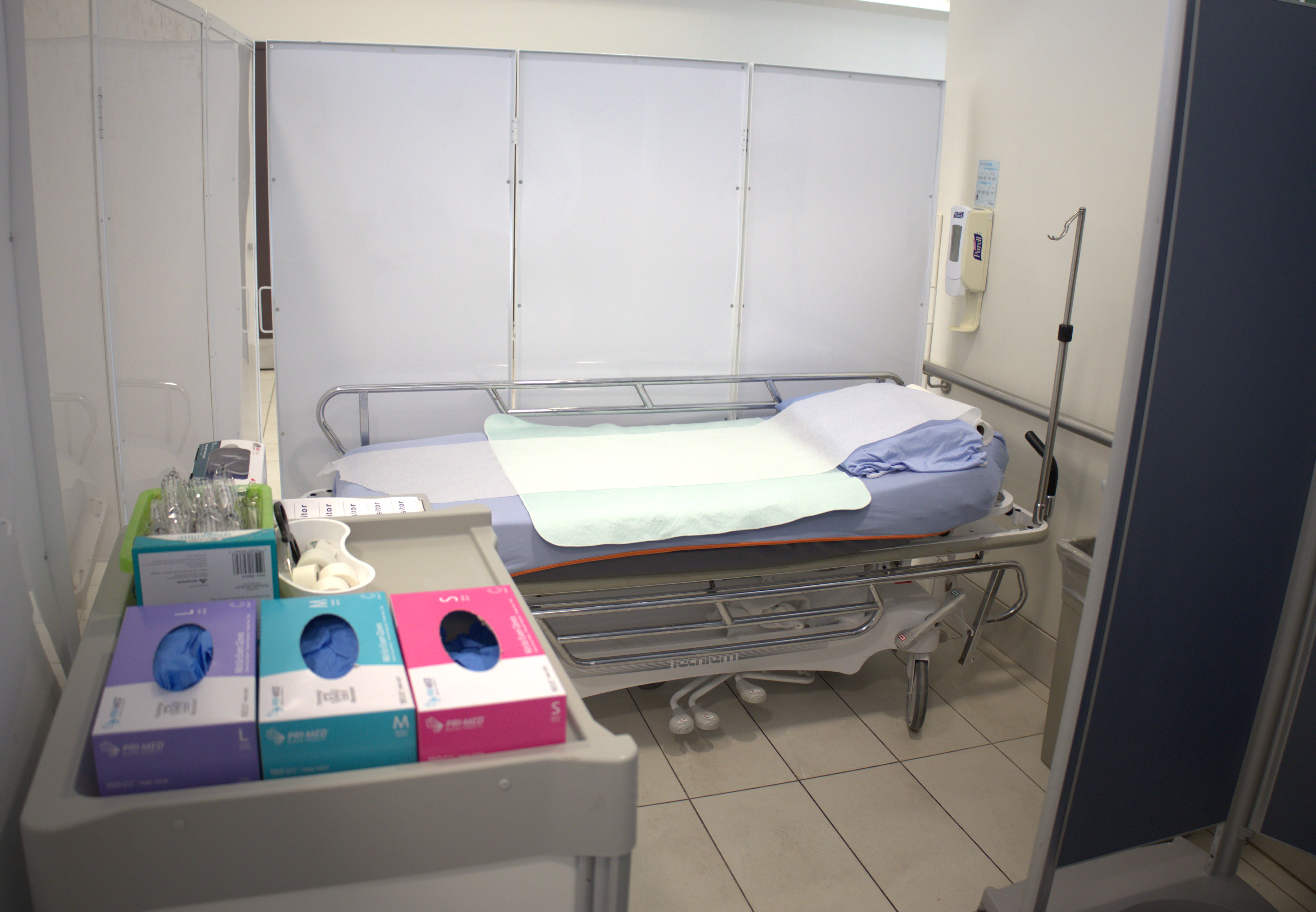
The sectioned-off station for the NP pilot program at the Marotta Family Hospital ED.
Mussie, who serves as a backup for triage, will read patients’ triage notes, have a conversation with patients and make a plan from there.
Following the success of the program in St. Catharines, similar strategies have recently been applied in Welland, with hopes to expand to Niagara Falls.
“The feedback from patients has been great,” says Mussie. “I’ve had so many patients say they’ve never seen a program like this before and that we have allowed people to feel safer and cared for. I feel extremely passionate about this pilot program, particularly considering that patient presentations and level of acuity can change in between triage and provider assessment. I am happy to be a catalyst in identifying dynamic patients’ needs, which has ultimately led to better outcomes.”
In addition to the NP program, Niagara Health has implemented a variety of improvements to its EDs.
Work has been better standardized for nurses. Triage nurses and other leadership initiatives have been implemented to educate patients about knowing their healthcare options. A fast-tract zone has been created for patients who are less acute with projected shorter stays, giving the ED more capacity. The ambulatory zone has been completely redesigned in St. Catharines. In February 2025, ambulance offload length of stays averaged 166 hours, dropping to a stunning 68 hours in February 2026.
“The ED is not an island,” says Dr. Setrak. “It’s the main door to the hospital and has the highest volume of patients, but it’s part of a big system. The work on hospital flow is the biggest thing we can do for ED performance. We’re leaving no stone unturned in trying to improve care.”
