
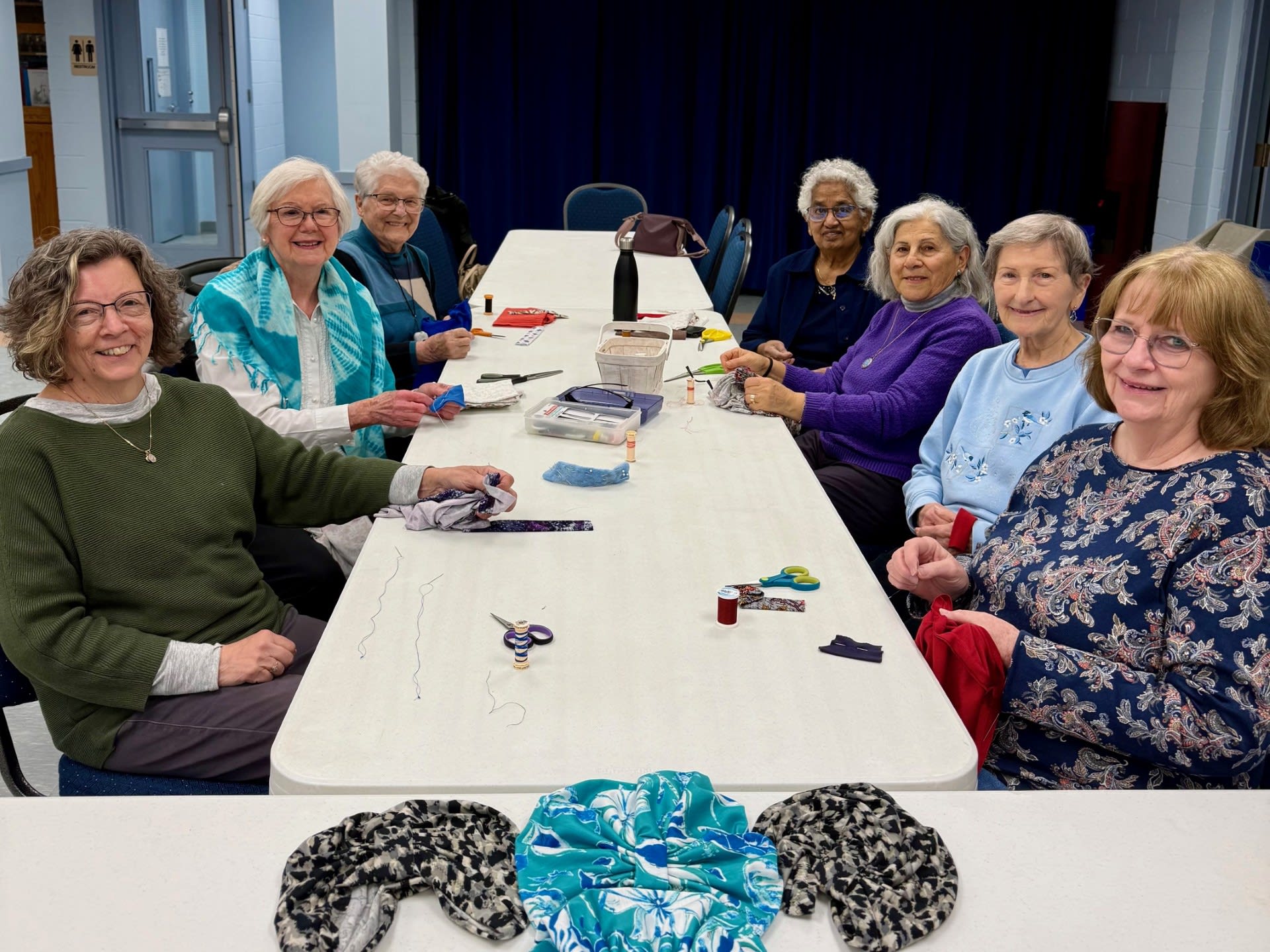
It starts, as it always does, with a quiet moment of reflection. Before a single stitch is sewn, the ladies of the Star of the Sea Church, Catholic Women’s League, gather and say a prayer — for people they may never meet but think about often.
People sitting in chemotherapy treatment chairs at the Walker Family Cancer Centre.
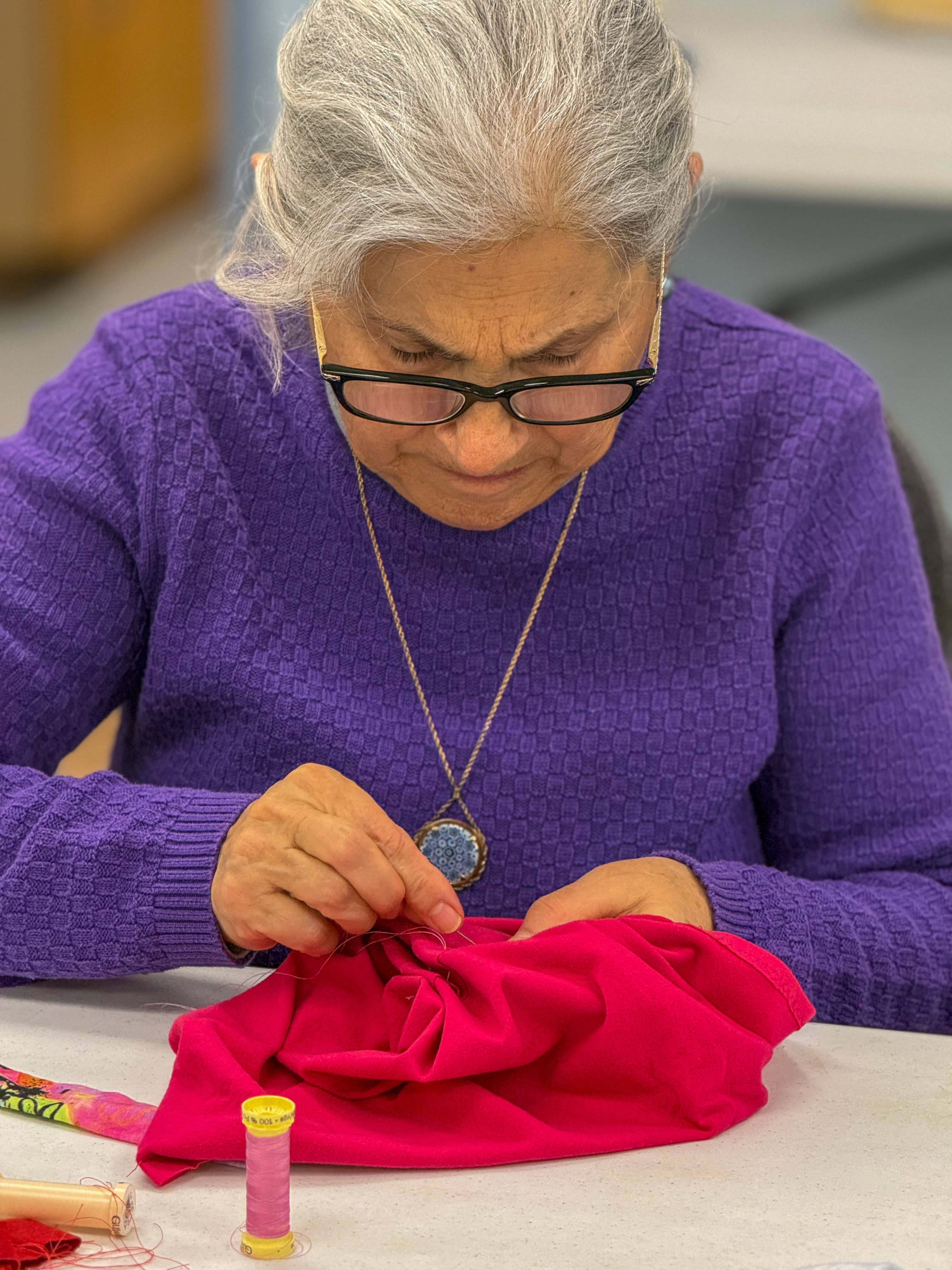
Then, the sewing begins, hand stitching hats for cancer patients – chemo caps they call them. And not long after, the laughter starts.
“Can’t get a word in that’s not a joke,” Frances Prindiville quips, as the room fills with conversation, teasing and the familiar rhythm of hands at work.
This is how they’ve done it for nearly 30 years.
“These ladies mean a lot to me; we mean a lot to each other,” says Marg Martin, Leader of the chemo cap ministry of Star of the Sea Church, Catholic Women's League. “Together, we're doing something for people who have a disease that touches us all, and we're happy to do it.”
5,581 Acts of care — and counting
The group began in 1998, in a home, with just four women, one man and an idea. To sew hats for cancer patients who lose their hair during treatment.
“I remember thinking, this is a great idea,” recalls Elsie Pavelko, of the moment it all started. She was one of those original members and is still part of the group today.
A pattern was found, fabric was gathered, and what began as a simple act of kindness quickly became something more enduring.
Today, the group has grown to include 10 women. Over the years, leadership has passed from one Margaret to another.
“It’s strange… I didn’t realize till today that we had three Margarets from the beginning to today,” Pavelko reflects.
Now led by Marg Martin (the third Margaret), the group continues its steady, dedicated work. To date, they’ve made 5,581 chemo caps. Each one sewn, stitched and finished by hand.
In a typical two-hour gathering, they produce between 20 and 25 caps, though they admit they could do more.
“We have to stop to have tea,” jokes Stella Pawlik.
More than just sewing
They could do the work alone at home, and sometimes they do. But being together matters.
“We could all take them home… but it’s not as much fun,” Prindiville explains.
Donna Drozdowski adds, “It’s a chance to get out of the house and be social and see each other.”
“Best part? Coffee break!” Margaret Vinc (the second Margaret to have led the group) says with a laugh.
Despite the lighthearted banter and the meaningful work, it’s not the only reason they come together. It’s an opportunity to share stories of their lives.
“I lost two daughters to cancer,” shares Pawlik, explaining one passed away from ovarian cancer, and one to brain cancer just last September.
“It was a bad Christmas,” she says. “But you don’t really want them suffering.”
For many in the group, this work is deeply personal. Martin herself wore these caps during her own cancer treatment 10 years ago.
“I couldn’t stand not wearing anything on my head in bed,” she recalls.
Others carry their own stories.
Francis Prindiville speaks of her sisters — one diagnosed with ovarian cancer at just 15; another who underwent a double mastectomy at 50.
There’s a quiet understanding in the room of why this work matters.
From fabric to frontline care
The caps themselves are made from donated or low-cost materials, often sourced through organizations like the Warehouse of Hope or purchased with funds from the Catholic Women’s League.
Each one costs about one dollar in materials. But the time, care and intention behind them? Priceless.
Once completed, the caps are delivered to Niagara Health’s Walker Family Cancer Centre (WFCC), where they are given to patients undergoing treatment.
“It feels good to bring a bag of completed caps to the hospital,” Martin says. “Because you know the volunteers and patients look forward to it.”
Pat Phipps has been volunteering at the WFCC for three years. Among her many duties, she helps hand out the hand-stitched chemo caps to patients who are losing their hair. “It's a very tender topic,” she says, explaining the need for a gentle approach.
“I go with my gut instinct and years of experience of reading people. When I ask if they would like one of the hats, I never force it on them. Only after they show an interest do I bring a few different colours over for them to choose from.
“For those who are interested, they just beam! There was a lady yesterday who was thrilled to have one to match her outfit.”
Meaningful connection and commitment
Although they may never meet the people who receive their caps, sometimes, thank-you cards make their way back.
Their reach has extended far beyond the local community, too. Caps have travelled as far as Sri Lanka and Abu Dhabi through personal connections.
Even during the challenges of COVID-19, the group found a way to continue.
They sewed from home. Dropped off materials. Kept going.
“Some groups… they kind of dissolved,” Martin reflects. “But what would we do without it?”
For a time, hospitals weren’t accepting donations, but the women kept sewing anyway, preparing for the day they could give again.
“This is one of our missions,” Martin says. “Hopefully, this group will last forever.”
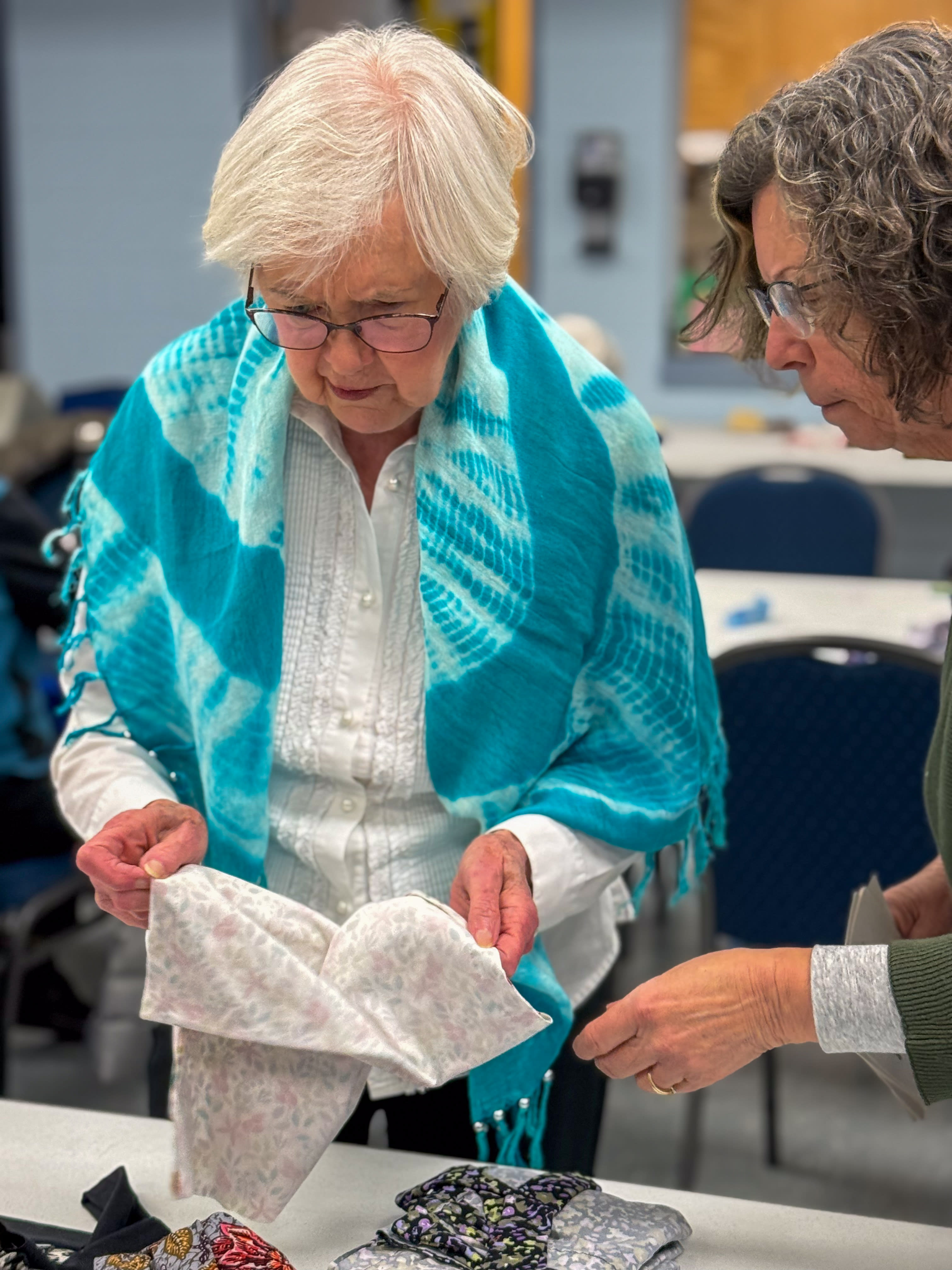
Margaret Vinc and Marg Martin carefully choose fabrics, mostly donated, for their next chemo caps.
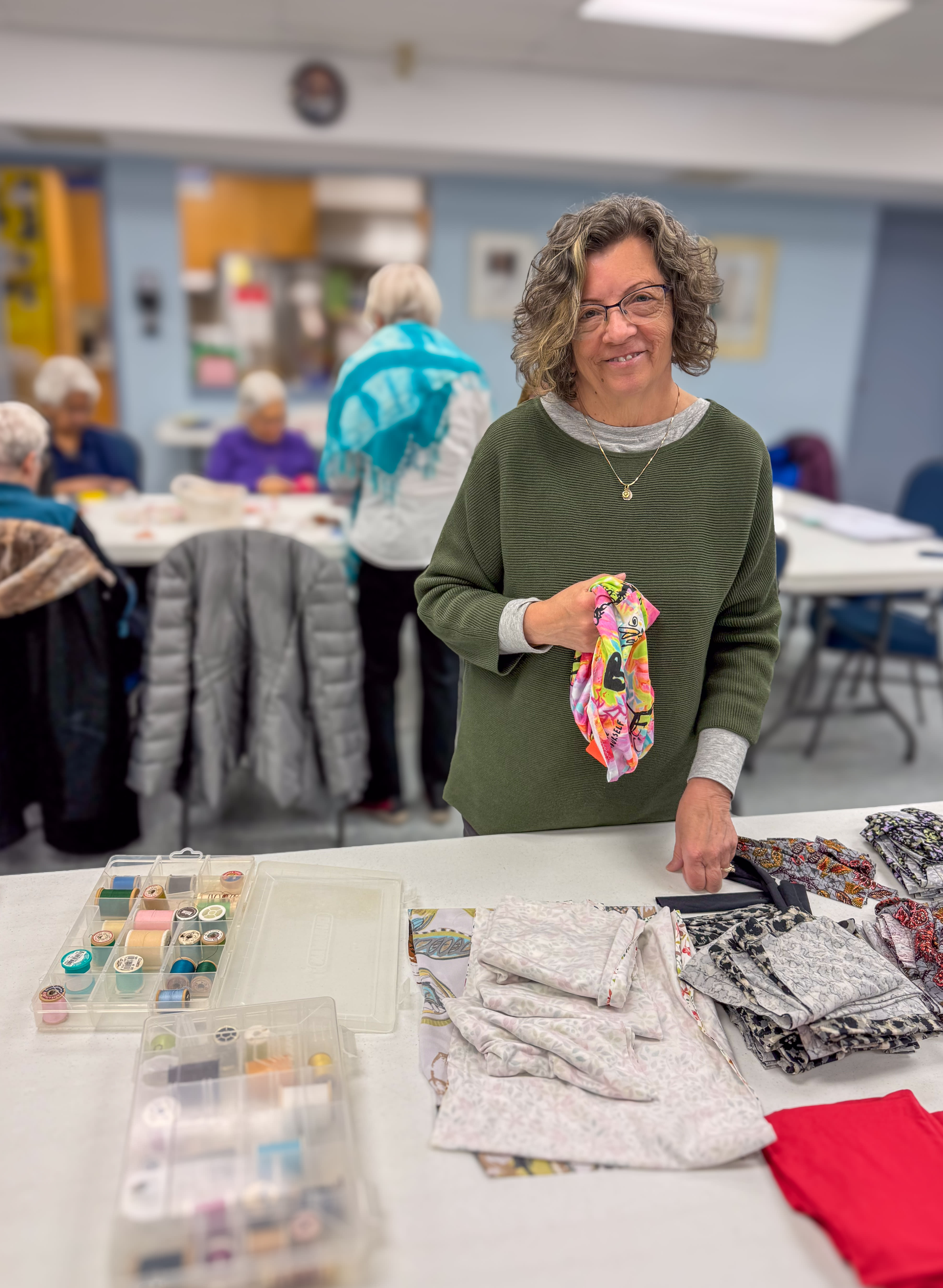
Marg Martin, leader of the chemo cap ministry of Star of the Sea Church, Catholic Women's League, wore these very chemo caps during her own cancer fight.
Supporting care at the Walker Family Cancer Centre
For patients receiving chemotherapy, something as simple as a soft, handmade cap can provide warmth, dignity and comfort during a difficult time.
The WFCC receives more than 15,000 chemotherapy treatment visits every year.
In addition, the centre provides immunotherapy, radiation treatment, urgent care, pain management, diagnostic programs for lung and prostate cancer and runs clinical trials. Each year, the team helps about 1,700 new patients, including roughly 400 with breast cancer and 600 with prostate cancer.
“We have to keep in mind that a patient receiving chemo incurs so many hidden expenses,” explains Phipps. “So, someone bringing them an unexpected small gift like this is so appreciated."
Stitch by stitch
Back in their gathering space in the church basement, the sewing continues.
There is tea. There is laughter. There are stories.
There is also purpose.
“Our goal is community and fellowship… and doing something good,” Martin says.
And with every stitch, they are.
