
Every moment counts when someone is having a stroke.
In the time it takes to pour a cup of coffee, an estimated 1.9 million neurons can die if blood flow to the brain is interrupted. That’s why care is orchestrated down to the minute when patients arrive at the Niagara Falls Hospital with stroke symptoms.
Patients are immediately taken for advanced brain imaging. While scans are being interpreted, teams assess whether clot-busting medication can be administered. If imaging shows a clot that requires surgical removal, specialists in Hamilton are alerted and the patient is quickly transferred.
"If the clot won't break up with the clot-busting medication, we have to get them on the surgical table to get the clot out as soon as possible," says Charmaine Martin-Gaspar, Nurse Practitioner on the Stroke Team. "The more time we take, the more deficit they have."
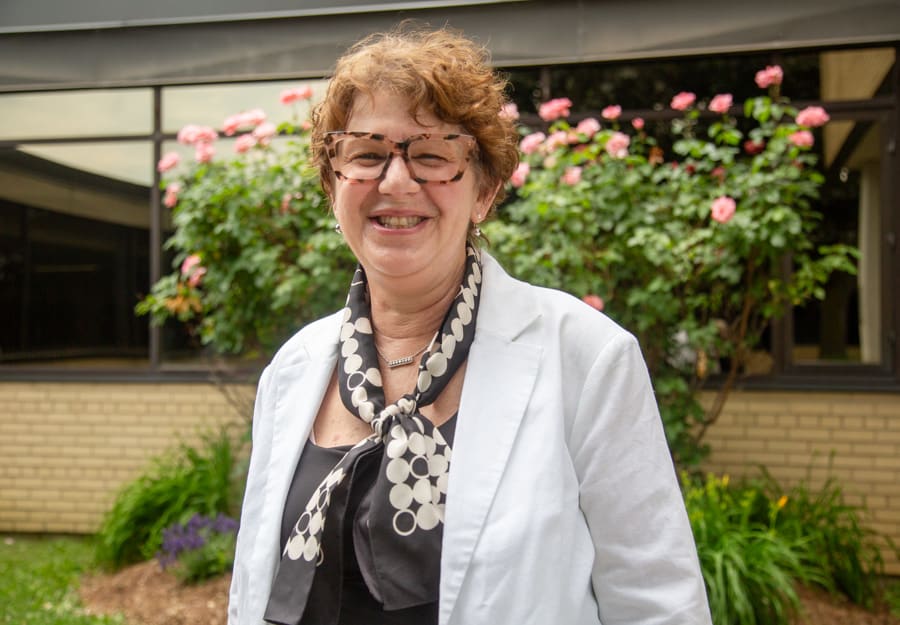
Achieving precise and timely care – and improving outcomes for stroke patients in the process – has been Charmaine’s life’s work.
She has spent 39 of her 40 years in nursing devoted to neurology, neurosurgery and stroke care. In that time, she’s seen how far treatment has come, particularly in Niagara, where she has helped it along a trajectory of continuous improvement.
She also knows how much potential there is for it to go farther.
Today, a patient who arrives at the hospital unable to move an arm, speak clearly or smile evenly may leave with little or no lasting disability because of rapid assessment, clot-busting medications, and partnerships with Hamilton General Hospital on advanced procedures that restore blood flow to the brain.
"Neurology is at a really exciting time to improve patient outcomes compared to how we envisioned strokes in the past,” Martin-Gaspar says. “That capacity to change people's outcomes, we couldn't do 10 years ago."
"Neurology is at a really exciting time to improve patient outcomes compared to how we envisioned strokes in the past. That capacity to change people's outcomes, we couldn't do 10 years ago."
Her passion for neuroscience – and a care philosophy rooted in a co-ordinated team approach – traces back to Toronto Western Hospital, where she joined a newly established neurological intensive care unit in her first year of nursing.
The chief of neurosurgery advocated for nurses to play a greater role in patient care by understanding the science behind what they were seeing at the bedside. With that knowledge in hand, they could alert physicians to changes and improve patient outcomes.
The experience transformed the way Charmaine viewed nursing and instilled the idea of “nurse-forward teaching,” which she has carried with her throughout her career.
At the time, she completed additional training in neurology before returning to school for her master's degree in science. She then upgraded her skills further, becoming an acute care nurse practitioner 26 years ago.
She worked in neuroscience care soon after at Hamilton General Hospital, where she became the first nurse practitioner dedicated to brain care. Charmaine used her expertise to help build Hamilton's regional neuro-interventional program, paving the way for treatments that today save lives and reduce disability for Niagara patients transferred there for specialized care.
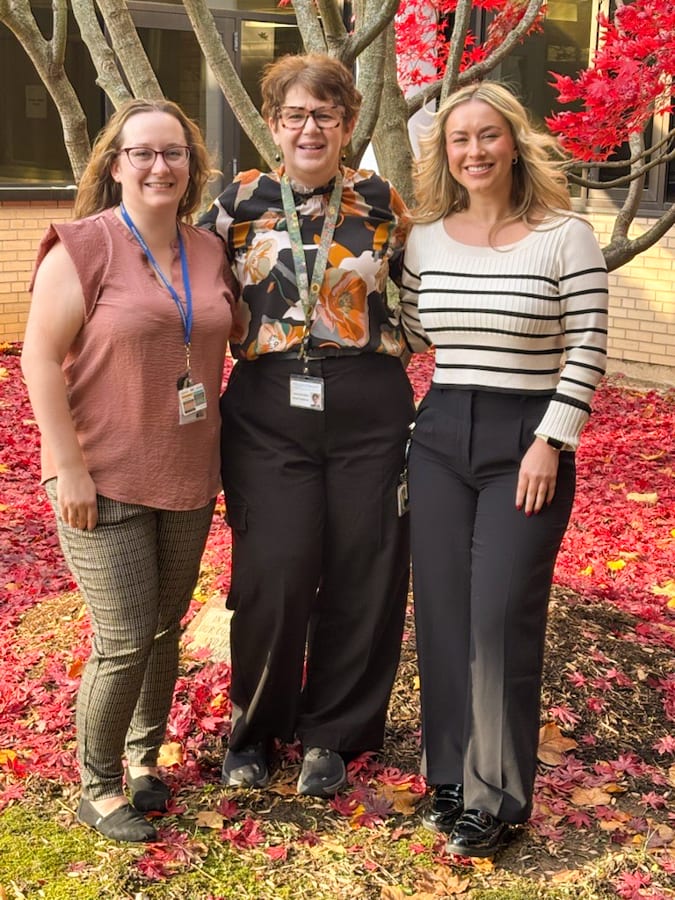
Even as technology and survival rates continue to advance, Charmaine maintains one of the most powerful tools in stroke care is knowledge.
It’s something she works to pass on every day. At Niagara Health, she teaches nurses how to perform initial neurological assessments and understand the different ways stroke can present when patients arrive at the hospital.
Nurses also play a critical role in ongoing care, learning from Charmaine the subtle neurological changes that could signal a patient is deteriorating and reacting immediately when something shifts.
Charmaine recalls a patient with a cerebellar stroke whose condition worsened rapidly. A nurse trained to recognize the warning signs noticed the changes and immediately escalated care. The patient was transferred to Hamilton for surgery within 90 minutes.
"He'll do well because we caught it early,” she says. "We have all this knowledge but if frontline staff don't know what to look for or need, you have worse outcomes. It's that philosophy – what do nurses need to know to make the patient outcomes the best they can be – that’s really what critical thinking for frontline nursing should be."
For Charmaine, who won an Excellence in Nursing Award in 2025, moments like that are among her proudest accomplishments. She knows her work is making a difference when former patients return to visit or nurses she has mentored confidently apply the skills she taught them.
"It's who I am – patients, family and team first. I've seen how, if you invest in them, lives can change."
A growing stroke care program also helps.
When Charmaine arrived at Niagara Health in 2021, there were three neurologists. Today, the program has five.
There are also three nurse practitioners, up from one, and a strong interdisciplinary team that meets twice weekly to co-ordinate patient care.
Accreditation Canada's Stroke Distinction designation in 2025 in both acute care and care across the continuum recognizes the high-quality care Niagara Health provides.
With the new South Niagara Hospital set to open in 2028 and serve as the future home for the Stroke Centre of Excellence, Charmaine is looking ahead to more advances in local care. That includes improving treatment times, expanding education and increasing access to neuro-interventional procedure, such as carotid stents or clot retrieval, closer to home.
“The brain is the most fascinating part of the body and the least understood,” she says. “At one time, if someone had a heart attack, they had to do open-heart surgery to remove blockages, but now an interventional cardiologist can insert a stent. They’re learning you can do the same thing with the brain – timely, least-invasive interventions. If we can do more of that locally down the road, that would be ideal.”
