
This is an opinion column by Dr. Maithili Shetty, Psychiatrist and Medical Lead, Rapid Access to Addiction Medicine (RAAM), originally published in the Niagara dailies.
During National Addictions Awareness Week, we have an opportunity to talk openly about substance use, challenge the stigma surrounding addiction and remind people in our community of an important message: addiction is treatable, recovery is possible and help is available.
As a psychiatrist working in addiction medicine, I meet people every day who are trying to take that first step. Some are reaching out for help for the first time. Others are returning after a setback. Many tell me they spent months, sometimes years, wondering whether treatment could help them or worrying about what others might think if they asked for support.
Substance use affects individuals and families from all walks of life. In Niagara, we continue to see the significant impact of alcohol and drug use across our community. In 2025/26, Niagara Health’s emergency departments treated 805 confirmed overdoses and 56 suspected overdoes. Between April and September 2026, our EDs treated 559 confirmed overdoses and 28 suspected cases.
Behind every statistic is a person, a family and often a difficult journey.
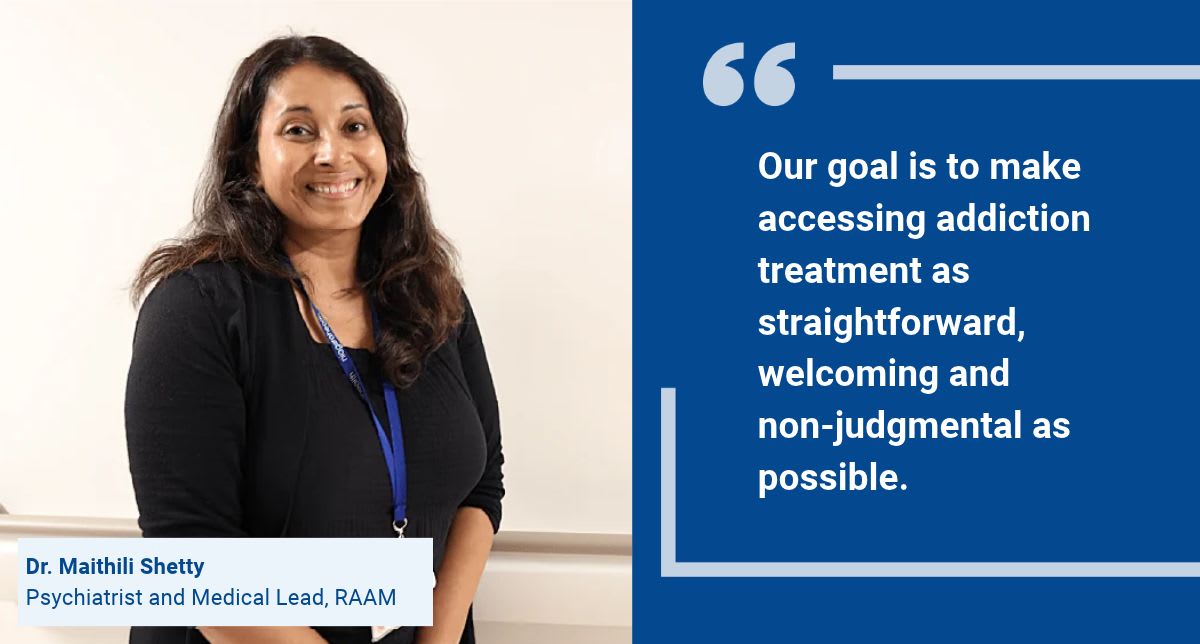
At Niagara Health, our goal is to make accessing addiction treatment as straightforward, welcoming and non-judgmental as possible.
One of the most important things we want people to know is that effective medical treatments for addiction exist.
For alcohol use disorder, medications such as naltrexone and acamprosate can help reduce cravings and support recovery. Alcohol withdrawal can be medically dangerous, and people with heavy daily alcohol use may need medical assessment before stopping abruptly. Bed-based care is available at Niagara Health’s Withdrawal Management Services for those who require additional clinical support and monitoring.
For opioid use disorder, treatments such as buprenorphine (Suboxone) and methadone are highly effective and can substantially reduce the risk of overdose and death. Long-acting injectable buprenorphine (Sublocade), administered monthly, has also been an important advancement in treatment. For some patients, it offers greater stability and freedom from the need to take medication every day.
People experiencing problems with cannabis, cocaine, methamphetamine or other substances can also benefit from treatment. Although medication options differ depending on the substance, counselling, behavioural therapies and ongoing medical support can make a meaningful difference.
Treatment is not one-size-fits-all. Recovery may involve medication, counselling, peer support, residential treatment or a combination of approaches.
Getting help does not have to be complicated. Niagara Health operates Rapid Access to Addiction Medicine (RAAM) clinics across our three hospital sites and at our 264 Welland Ave. location in St. Catharines, offering walk-in assessments for new patients. No physician referral is required. Patients can meet with a physician or nurse practitioner experienced in addiction medicine to discuss treatment options and develop a plan for moving forward.
Between January and October 2026, our RAAM clinics saw 1,284 visits for people seeking addiction treatment and support. Every one of those visits represents someone taking an important step toward better health and recovery.
Where to find help in Niagara
Help is available at every stage of recovery. Niagara residents can access medical treatment, counselling, peer support and community-based addiction services. Families and loved ones can also access support and guidance.
Niagara Health RAAM Clinics
No referral required for walk-in assessments.
St. Catharines, 264 Welland Ave.
- Monday, 9-11 a.m.
- Wednesday, 1-3 p.m.
- Thursday, 9-11 a.m.
- Youth Addiction Clinic: Monday, 1-3 p.m.
- Tel: 289-479-5090
Niagara Falls Hospital
- Wednesday, 9-11 a.m.
Welland Hospital
- Friday, 9-11 a.m.
RAAM information: 905-378-4647 ext. 49463
Community Addiction Services of Niagara: 905-684-1183
ConnexOntario: 1-866-531-2600, free confidential support 24/7, or connexontario.ca
Emergency: Call 911 for a suspected overdose.
We are pleased to have expanded access for young people in Niagara. Our new child and adolescent addiction medicine clinic, led by Dr. Barbara Yu-Siao, offers walk-in assessments on Monday afternoons from 1 to 3 p.m. at 264 Welland Ave. in St. Catharines. This provides another important pathway for youth and families seeking specialized support.
Perhaps the most important message during National Addictions Awareness Week is that no one needs to wait until they reach a crisis to ask for help.
People can seek treatment whether they are beginning to question their substance use, hoping to cut back, ready to stop or returning to treatment after a setback.
Recovery is not always a straight line. There may be successes, setbacks and periods of uncertainty. Seeking help takes courage, and our responsibility as healthcare providers is to meet people where they are, without judgment, and offer compassionate, evidence-based care.
If you or someone you love is struggling with substance use, please know that effective treatment exists, support is available and you do not have to navigate it alone.
