New NHKI senior scientist to advance research into older adult care
While Dr. Lisa Burry’s life and career started on the other side of the country, in a way, her coming to the Niagara Health Knowledge Institute (NHKI) is a full-circle moment.
Share This Page

The Niagara Health Knowledge Institute (NHKI) was established in May 2023 with a generous donation by the McCall MacBain Foundation.
Our Purpose
Improve patient care and experience by embedding research into clinical practice.
Our Vision
Transform healthcare through leading community hospital-based research.
Our Values
Equity | Collaboration | Continuous Learning | Innovation | Empowerment
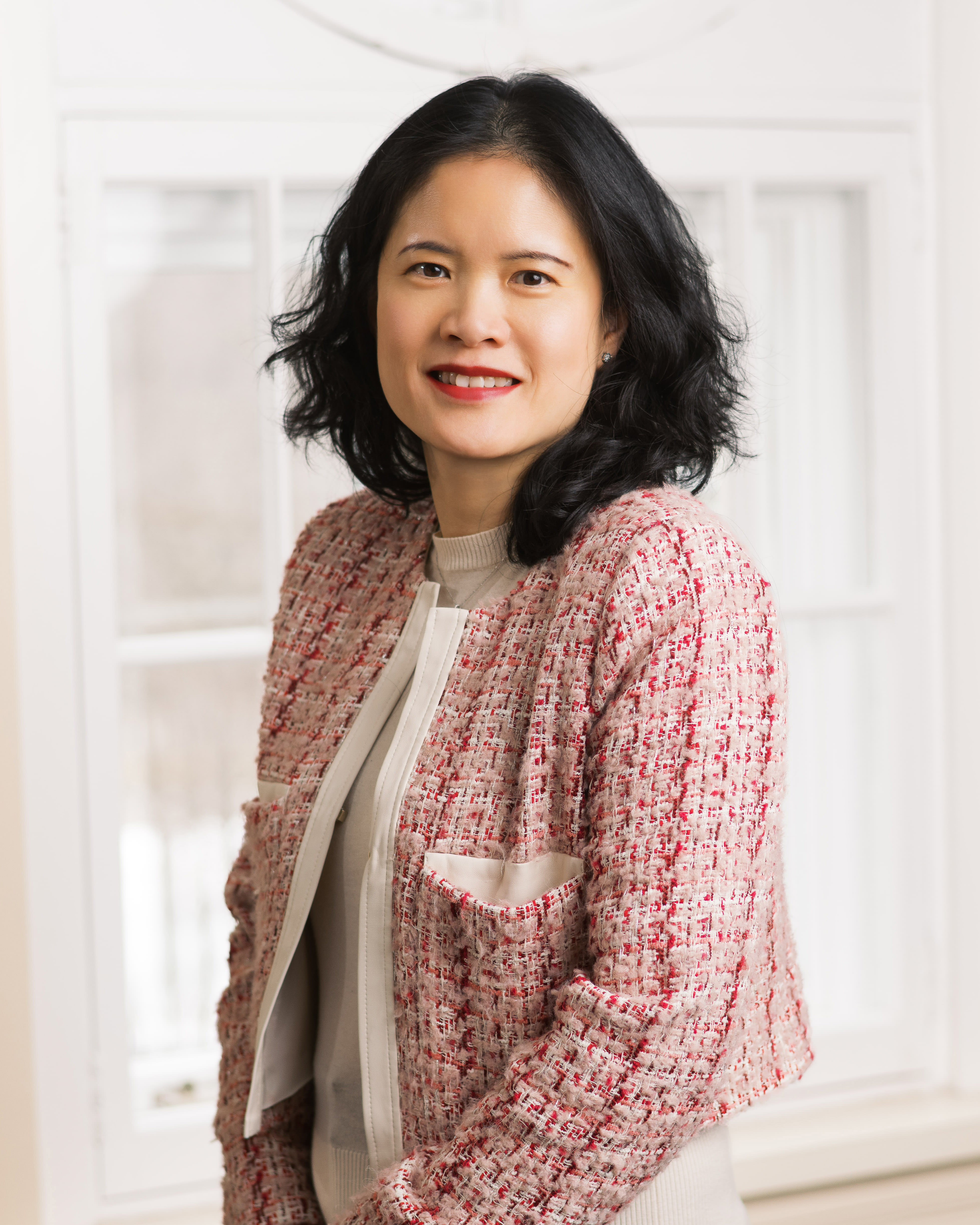
Harpreet Bassi, PhD, is the Executive Vice-President, Strategy, Research and Redevelopment.
With a career spanning more than 20 years in the health-care sector, Harpreet has held key leadership positions at Health Quality Ontario, Cancer Care Ontario, The Centre for Effective Practice and The Change Foundation. Most recently, she served as the Director of Policy for Ontario’s Deputy Premier and Minister of Health. She holds an Honours Bachelor of Arts degree from the University of Toronto, a Masters of Public Administration from Queens University and a PhD in Health and Rehabilitation Science from the University of Western Ontario.
Harpreet sits on the Board of Directors for Public Health Ontario and holds an Adjunct Faculty position within the School of Health Sciences at Western University.
Harpreet was born and raised in Scarborough, Ontario. In her leisure time, Harpreet enjoys reading, writing and hiking.
Dr. Jennifer Tsang (she/her), MD, PhD, FRCPC, ABOM, completed her Doctor of Medicine degree (cum laude) at the University of Ottawa in 2003. She returned to Toronto, where she completed residency training in Internal Medicine in 2006, followed by fellowship training in Adult Critical Care Medicine in 2008. While working as an adult critical care physician at Sunnybrook Health Sciences Centre in Toronto, she completed a PhD at the University of Toronto focused on the molecular biology of sepsis. In 2013, she joined Niagara Health as an adult critical care physician, and in 2015 she was appointed Physician Research Lead. In 2020, she became a Diplomate of the American Board of Obesity Medicine and provides specialized care to patients with obesity in Southern Ontario.
She is currently the founding Executive Director and Chief Scientist of the Niagara Health Knowledge Institute; Professor in the Department of Medicine, McMaster University; and Regional Deputy Research Director, Internal Medicine Residency Program, McMaster University. She founded the Critical Care Research Program at Niagara Health, a program recognized by the Health Standards Organization as a Leading Practice. She has over 115 peer-reviewed research publications and over $110 million in research grant funding as Principal Applicant and Co-Applicant. She received the McMaster University Department of Medicine Early Career Research Award (2015), the Canadian Critical Care Trials Group Early Career Research Award (2018), and the McMaster University Department of Medicine Mid-Career Research Award (2020).
Her academic work focuses on health research transformation in Canada by increasing research capacity in community hospitals across the country. She is active in expanding clinical trials to Niagara Health and other community hospitals across Canada and is a co-investigator on more than 35 multicentre clinical trials. At the provincial level, she sits on the planning committee of Critical Care Services Ontario’s Critical Care Clinical Practice Rounds, and on the Ontario Hospital Association’s Hospital-Based Coordination Working Group, which envisions a fully integrated health research and healthcare delivery system across Ontario. At the national level, she is co-founder and co-chair of the Canadian Community ICU Research Network and was the co-chair of the COVID-19 Network of Clinical Trials Networks’ Community Acute and Critical Care Working Group. She also co-chairs the ACT Portfolio Hospital Committee, which provides financial support and mentorship to community hospitals developing research programs. She is a Council Member of the Royal College of Physicians and Surgeons of Canada, a member of the Royal College Research and Evaluation Advisory Committee, and a Board Member of the Canadian Critical Care Trials Group.
She is also active in educating and equipping health and research professionals in a broad range of research methodologies, supervising graduate students and postdoctoral fellows and serving as a steering committee member and mentor with the CIHR-funded Life-Threatening Illness National Group (LifTING) Research Training Platform. LifTING’s mandate is to address the lack of translation of new scientific knowledge into improved healthcare practices, and the health inequities that persist despite significant advances in health sciences. She is a co-investigator of the CIHR-funded Health Systems Impact Research Training Program. Outside her clinical and academic work, she served as a Board Member at Quest Community Health Centre in Niagara from 2019 to 2024, including as Board Co-Chair from 2023 to 2024.
Internationally, she serves on the interim council of the International Forum for Acute Care Trialists (InFACT), the leadership team of PRIME Ireland (Pandemic Resilience Ireland Clinical Platform), and the World Health Organization’s Global Optimization of Respiratory Support Collaboration Working Group.
Elaina Orlando, PhD, MPH, is the Director of Research Operations at the Niagara Health Knowledge Institute (NHKI), Assistant Professor (Part-Time) in the Department of Health Research Methods, Evidence and Impact at McMaster University, and Adjunct Professor in the Department of Health Sciences at Brock University. She holds a PhD in Health Services Research from the University of Toronto, a Master of Public Health from the University of Waterloo, and an Honours Bachelor of Public Health from Brock University.
Dr. Orlando's career spans more than fifteen years in Niagara's public health and acute care sectors — a Niagara-rooted path that began as an epidemiologist at Niagara Region Public Health and continued at Niagara Health as a Quality and Patient Safety Specialist and then Manager of Integrated Transitions in Care. As the NHKI's founding Research Manager, she built the operational foundation of research at Niagara Health: developing and implementing twelve research policies and procedures, creating standardized tools and processes for clinical research teams, and leading the successful application for Niagara Health's institutional eligibility to administer Canadian Institutes of Health Research (CIHR) grants — a designation held by only a handful of non-teaching acute care hospitals in Ontario. Under her operational leadership, Niagara Health's clinical research grew from four programs to eight, running 58 clinical trials and enrolling more than 600 patients in 2025.
Dr. Orlando is also an active health services researcher. Her work uses mixed methods to investigate quality improvement and implementation science in the health system, mechanisms for enhancing community hospital participation in research, and how medical and staff engagement can be leveraged to create sustainable organizational change. She completed a Postdoctoral Fellowship with the Canadian Critical Care Trials Group under the supervision of Dr. Jennifer Tsang, leading a mixed-methods case study of how context influences Canadian community hospital participation in research, and she is a core contributor to the NHKI's RICH-Canada program on community hospital research capacity building.
A committed educator and mentor, Dr. Orlando co-coordinates and teaches a graduate course on applied qualitative research methods at McMaster University, previously lectured in health administration at Brock University for six years, and trained more than 150 frontline staff and leaders in quality improvement methods at Niagara Health. She graduated in the inaugural cohort of the CIHR-funded Life-Threatening Illness National Group (LifTING) Health Research Training Program and now serves as a mentor on the platform. She also operationalized the NHKI Summer Student Research Scholarships in partnership with Brock University, McMaster University's Thrombosis and Atherosclerosis Research Institute, Niagara College, and the University of Niagara Falls Canada — helping develop and retain the region's next generation of health researchers.
Provincially and nationally, Dr. Orlando represents the NHKI on the Ontario Hospital Association's Hospital-Based Research community of practice ,serves on the Accelerating Clinical Trials (ACT) Portfolio Hospital Committee, and chairs the Evaluation and Measurement Working Group of the Canadian Clinical Research Workforce Strategy, all of which support research capacity building in hospitals. Her early-career recognition includes the Public Health Commissioner's Award for Leadership Excellence from Niagara Region and the Dr. Sheela Basrur Scholarship from the Ontario Public Health Association.
Dr. Jennifer Tsang (she/her), MD, PhD, FRCPC, ABOM, completed her Doctor of Medicine degree (cum laude) at the University of Ottawa in 2003. She returned to Toronto, where she completed residency training in Internal Medicine in 2006, followed by fellowship training in Adult Critical Care Medicine in 2008. While working as an adult critical care physician at Sunnybrook Health Sciences Centre in Toronto, she completed a PhD at the University of Toronto focused on the molecular biology of sepsis. In 2013, she joined Niagara Health as an adult critical care physician, and in 2015 she was appointed Physician Research Lead. In 2020, she became a Diplomate of the American Board of Obesity Medicine and provides specialized care to patients with obesity in Southern Ontario.
She is currently the founding Executive Director and Chief Scientist of the Niagara Health Knowledge Institute; Professor in the Department of Medicine, McMaster University; and Regional Deputy Research Director, Internal Medicine Residency Program, McMaster University. She founded the Critical Care Research Program at Niagara Health, a program recognized by the Health Standards Organization as a Leading Practice. She has over 115 peer-reviewed research publications and over $110 million in research grant funding as Principal Applicant and Co-Applicant. She received the McMaster University Department of Medicine Early Career Research Award (2015), the Canadian Critical Care Trials Group Early Career Research Award (2018), and the McMaster University Department of Medicine Mid-Career Research Award (2020).
Her academic work focuses on health research transformation in Canada by increasing research capacity in community hospitals across the country. She is active in expanding clinical trials to Niagara Health and other community hospitals across Canada and is a co-investigator on more than 35 multicentre clinical trials. At the provincial level, she sits on the planning committee of Critical Care Services Ontario’s Critical Care Clinical Practice Rounds, and on the Ontario Hospital Association’s Hospital-Based Coordination Working Group, which envisions a fully integrated health research and healthcare delivery system across Ontario. At the national level, she is co-founder and co-chair of the Canadian Community ICU Research Network and was the co-chair of the COVID-19 Network of Clinical Trials Networks’ Community Acute and Critical Care Working Group. She also co-chairs the ACT Portfolio Hospital Committee, which provides financial support and mentorship to community hospitals developing research programs. She is a Council Member of the Royal College of Physicians and Surgeons of Canada, a member of the Royal College Research and Evaluation Advisory Committee, and a Board Member of the Canadian Critical Care Trials Group.
She is also active in educating and equipping health and research professionals in a broad range of research methodologies, supervising graduate students and postdoctoral fellows and serving as a steering committee member and mentor with the CIHR-funded Life-Threatening Illness National Group (LifTING) Research Training Platform. LifTING’s mandate is to address the lack of translation of new scientific knowledge into improved healthcare practices, and the health inequities that persist despite significant advances in health sciences. She is a co-investigator of the CIHR-funded Health Systems Impact Research Training Program. Outside her clinical and academic work, she served as a Board Member at Quest Community Health Centre in Niagara from 2019 to 2024, including as Board Co-Chair from 2023 to 2024.
Internationally, she serves on the interim council of the International Forum for Acute Care Trialists (InFACT), the leadership team of PRIME Ireland (Pandemic Resilience Ireland Clinical Platform), and the World Health Organization’s Global Optimization of Respiratory Support Collaboration Working Group.
Elaina Orlando, PhD, MPH, is the Director of Research Operations at the Niagara Health Knowledge Institute (NHKI), Assistant Professor (Part-Time) in the Department of Health Research Methods, Evidence and Impact at McMaster University, and Adjunct Professor in the Department of Health Sciences at Brock University. She holds a PhD in Health Services Research from the University of Toronto, a Master of Public Health from the University of Waterloo, and an Honours Bachelor of Public Health from Brock University.
Dr. Orlando's career spans more than fifteen years in Niagara's public health and acute care sectors — a Niagara-rooted path that began as an epidemiologist at Niagara Region Public Health and continued at Niagara Health as a Quality and Patient Safety Specialist and then Manager of Integrated Transitions in Care. As the NHKI's founding Research Manager, she built the operational foundation of research at Niagara Health: developing and implementing twelve research policies and procedures, creating standardized tools and processes for clinical research teams, and leading the successful application for Niagara Health's institutional eligibility to administer Canadian Institutes of Health Research (CIHR) grants — a designation held by only a handful of non-teaching acute care hospitals in Ontario. Under her operational leadership, Niagara Health's clinical research grew from four programs to eight, running 58 clinical trials and enrolling more than 600 patients in 2025.
Dr. Orlando is also an active health services researcher. Her work uses mixed methods to investigate quality improvement and implementation science in the health system, mechanisms for enhancing community hospital participation in research, and how medical and staff engagement can be leveraged to create sustainable organizational change. She completed a Postdoctoral Fellowship with the Canadian Critical Care Trials Group under the supervision of Dr. Jennifer Tsang, leading a mixed-methods case study of how context influences Canadian community hospital participation in research, and she is a core contributor to the NHKI's RICH-Canada program on community hospital research capacity building.
A committed educator and mentor, Dr. Orlando co-coordinates and teaches a graduate course on applied qualitative research methods at McMaster University, previously lectured in health administration at Brock University for six years, and trained more than 150 frontline staff and leaders in quality improvement methods at Niagara Health. She graduated in the inaugural cohort of the CIHR-funded Life-Threatening Illness National Group (LifTING) Health Research Training Program and now serves as a mentor on the platform. She also operationalized the NHKI Summer Student Research Scholarships in partnership with Brock University, McMaster University's Thrombosis and Atherosclerosis Research Institute, Niagara College, and the University of Niagara Falls Canada — helping develop and retain the region's next generation of health researchers.
Provincially and nationally, Dr. Orlando represents the NHKI on the Ontario Hospital Association's Hospital-Based Research community of practice ,serves on the Accelerating Clinical Trials (ACT) Portfolio Hospital Committee, and chairs the Evaluation and Measurement Working Group of the Canadian Clinical Research Workforce Strategy, all of which support research capacity building in hospitals. Her early-career recognition includes the Public Health Commissioner's Award for Leadership Excellence from Niagara Region and the Dr. Sheela Basrur Scholarship from the Ontario Public Health Association.
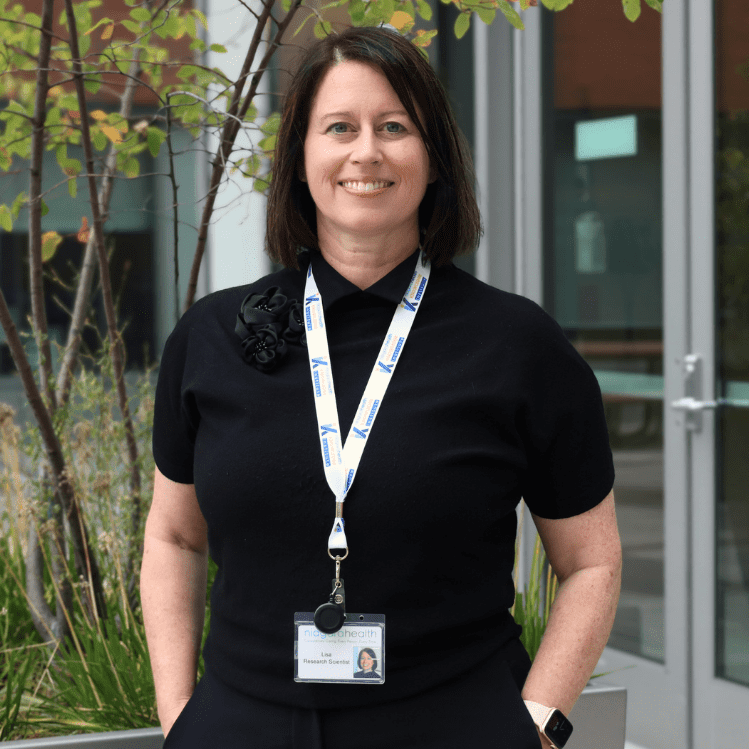
Lisa Burry, BScPharm, PharmD, PhD, is a Senior Scientist and Pharmacist at the Niagara Health Knowledge Institute (NHKI), where she leads the Care for Older Persons strategy. She joined the NHKI from Sinai Health in Toronto, where she practised as a critical care pharmacist, and the University of Toronto, where she remains an Associate Professor. She brings to the role twenty-five years of intensive care unit clinical practice together with a PhD in clinical epidemiology that grounds her research in rigorous methods spanning evidence synthesis, population-based analyses, and clinical trials.
Dr. Burry's research program addresses the prevention, recognition, and management of delirium and the safe use of psychoactive medications — including antipsychotics, sedatives, and antidepressants — with particular attention to older adults. In collaboration with ICES and with CIHR funding, her team produced the first population-level characterization of how frequently older ICU survivors are started on sedatives and other psychoactive medications and subsequently kept on them, and linked these exposures to falls, fractures, emergency department visits, readmission, and mortality — work published in Chest, the American Journal of Respiratory and Critical Care Medicine, and CMAJ, and recognized with the 2023 American Thoracic Society Frederick Hargreave Clinical Research Award. Her findings have been incorporated into the Society of Critical Care Medicine's 2026 guidelines on caring for critically ill older adults and adopted by Ontario Health's Delirium Aware Safer Healthcare (DASH) campaign, on whose steering committee she serves. She has published 220 indexed manuscripts, cited more than 22,000 times.
Dr. Burry has designed and led landmark studies in her field. She led MELLOW, a Health Canada-regulated multicentre randomized feasibility trial of melatonin for delirium prevention in critically ill patients, selected as a late-breaking trial at CHEST 2025; she currently leads DREAM-HD, a multicentre trial of early haloperidol and dexmedetomidine for agitated delirium; and she co-led the landmark SLEAP trial of daily sedation interruption, published in JAMA. Her lead-author Cochrane reviews and network meta-analysis of delirium prevention interventions are cited throughout international guidelines, and she has helped set the methodological foundations of the field through the Del-CoRS core outcome sets for delirium research and the NIH-funded NIDUS roadmap for delirium treatment trials.
A sought-after voice in international guideline development and health policy, Dr. Burry contributed to the delirium sections of the SCCM 2026 older-adults guidelines, served as the only pharmacist and a voting member on the American Thoracic Society's 2023 ARDS guidelines, sits on the writing panels of the Surviving Sepsis Campaign and Global Sedation, Analgesia and Delirium guidelines, and served as the sole pharmacist on the World Health Organization's COVID-19 Therapeutics Advisory Group. During the pandemic she led a threefold expansion of ICU pharmacy services at Sinai Health and served on Ontario's Provincial Command Critical Drug Supply Task Force, work recognized with a 2022 SCCM Presidential Citation. She continues to contribute to national drug policy through the CADTH Expert Panel.
A Métis woman, pharmacist, and researcher, Dr. Burry began her career as a clinical pharmacist in a rural community hospital, and that community grounding shapes her work today. Her appointment at the NHKI extends her research into community hospitals and integrated care, where the equitable, real-world application of delirium prevention and deprescribing evidence for older adults will ultimately be tested.

Heather O'Grady, PhD, is an Early Career Research Scientist at the Niagara Health Knowledge Institute (NHKI) and Assistant Professor (Part-Time) in the Department of Health Research Methods, Evidence and Impact at McMaster University. She completed her PhD in Rehabilitation Science, with a specialization in Knowledge Translation, at McMaster University in 2023, followed by a Postdoctoral Fellowship at the NHKI, and was appointed to her first independent research role at the NHKI in October 2025. She leads the Institute's Patient Experience and Engagement in Research Portfolio, building capacity for patient and public engagement in research within the Niagara Region and across Canadian community hospitals.
Dr. O'Grady's research aims to improve the quality, delivery, and implementation of acute and critical care through patient- and family-oriented, embedded health research. Her work spans critical care rehabilitation, informed consent, patient and family engagement, implementation science, and embedded research within learning health systems. Over the past five years she has authored 35 publications, including 15 as first author, in leading journals such as NEJM Evidence, JAMA Network Open, Critical Care, and the Canadian Journal of Anesthesia. Highlights include a systematic review and meta-analysis of leg-cycle ergometry in critically ill patients, simultaneously presented and published at the European Society of Intensive Care Medicine 2024 Meeting (NEJM Evidence, 2024), and a pooled analysis of five international rehabilitation studies examining the sit-to-stand test as a patient-centred functional outcome (Critical Care, 2022).
She leads CONSENT-ICU, an international program of work to improve the informed consent process for patients and families approached about research participation in the intensive care unit, supported by a National Early Career Researcher Award (2026). She also co-led CAN-Measure, a Sepsis Canada-funded, pan-Canadian quality-improvement initiative to standardize training for outcome measure assessors in ICU-based sepsis studies. Her research has been supported by competitive funding from CIHR and other national organizations, including an Interdisciplinary Fellowship from the Canadian Frailty Network, and she is a graduate of the CIHR-funded Sepsis Canada and Life-Threatening Illness National Group (LifTING) Health Research Training Program.
Nationally and internationally, Dr. O'Grady serves on the International Forum for Acute Care Trialists (InFACT) Patient and Public Involvement Working Group, the REMAP-CAP International Patient and Public Involvement Panel, and the Federated Platform Trials Consent and Patient and Public Involvement and Engagement Working Group. At the NHKI, she co-led the formation of the Institute's first Patient and Family Engagement in Research Committee alongside three inaugural patient and family partners, and she co-developed freely available online learning modules that build applied health research capacity among staff and clinicians at community hospitals.
Dr. O'Grady is an active mentor and educator, having supervised or co-supervised more than fifteen graduate, medical, and undergraduate students, with student-led work resulting in peer-reviewed publications and national conference presentations. She also serves on the Board of Directors of Haldimand War Memorial Hospital in Dunnville, Ontario, bridging embedded research and health system governance in a community hospital setting.

Leigha Comer, PhD, is a Postdoctoral Fellow at the Niagara Health Knowledge Institute (NHKI) and McMaster University. Before joining the NHKI in 2026, she held a Social Sciences and Humanities Research Council (SSHRC) Postdoctoral Fellowship in the School of Health Studies at Western University. She completed her PhD in Sociology at York University in 2023 as a Vanier Canada Graduate Scholar, with a dissertation examining the social organization of opioid use in Ontario.
Dr. Comer is a qualitative health researcher with expertise in institutional ethnography, integrated knowledge translation, and research co-production. Her research examines chronic pain, opioid use, and drug policy, with particular attention to equity, power, and the experiences of people navigating the health system. At the NHKI, she is a co-applicant on the CIHR-funded INSIGHTS-Niagara study, a Niagara-led investigation of how sepsis is recognized and treated in hospital, and she is developing a program of research on priority setting and partnership building for the care of older adults in Niagara. Her first book, No Hope for Relief: Using Opioids for Chronic Pain in an Age of Drug-Related Panic, is forthcoming from University of Toronto Press in 2027, and her work has appeared in journals including the International Journal of Drug Policy, the Annals of Family Medicine, the Canadian Journal of Pain, and Health Research Policy and Systems.
Dr. Comer is an experienced educator and mentor. She lectures on advanced qualitative research methodology at Western University, supervises graduate and undergraduate trainees across multiple funded projects, and facilitates workshops on qualitative and community-engaged research — including workshops that support people with chronic pain in engaging with health research. She was recognized with a Dean's Award for Excellence in Teaching at York University and, in 2026, with the SSHRC Talent Impact Award.
She contributes broadly to her fields through editorial and professional service, including as a founding editorial board member of the Journal of Institutional Ethnography, an editorial board member of the Canadian Journal of Pain, and a board member of the International Sociological Association's Equity, Diversity, and Inclusion Taskforce. She advises Pain BC on accredited continuing medical education in disability and chronic pain, and is a long-standing member of the Canadian Pain Society's Medical Education in Pain Special Interest Group.
Beyond academia, Dr. Comer is a committed community leader and advocate. She is the founder and co-director of Unmanaged, a national initiative supporting people with chronic pain and people who use opioids, and co-leads community-based research with the Disability Justice Network. Her scholarship is grounded in nearly a decade of patient-led advocacy, including leadership roles with the Chronic Pain Association of Canada.

Andrea Dafel, PhD, is a Postdoctoral Fellow at the Niagara Health Knowledge Institute (NHKI) and McMaster University. She completed her PhD in Health Policy at McMaster University in 2026, following a Master of Public Health from Western University and an Honours Bachelor of Science in Medical Science from Brock University, where she graduated with First Class Standing.
Dr. Dafel's research focuses on patient and public engagement in health systems and health policy. At the NHKI, she works on the Ministry of Health-funded Post-Occupancy Evaluation (POE) study, and she mentors PhD student Emily Baker on the LEAD-RICH study, which explores community hospital leaders' experiences with organization- and systems-level strategies to build community hospital research capacity in Canada. Her doctoral work evaluated how patient engagement is practised and assessed in health system organizations across Ontario, and she has contributed to national scholarship on public engagement in health policy-making for older adults, including a systematic search and scoping review published in Health Expectations (2024). As a research assistant at McMaster, she supported the development of a framework outlining the competencies, supports, and enablers needed to build engagement-capable Ontario Health Teams, and contributed to program evaluations for the Ontario Ministry of Health.
Her experience spans research and practice across the health system. She has conducted rapid evidence syntheses on pressing mental health and addictions questions for the Mental Health and Addictions Centre of Excellence, led patient experience data collection and analysis to drive quality improvement at the London Health Sciences Centre's Urgent COVID Care Clinic, and evaluated community support services addressing mental illness and homelessness in Toronto. Her research career began in Niagara: as an undergraduate at Brock University, she was selected for the Interprofessional Education for Quality Improvement Program (IEQUIP), a two-year quality-improvement research project spanning the five Niagara Region hospitals, which she presented at the Institute for Healthcare Improvement conference in Orlando.
Dr. Dafel is also an experienced educator, serving as co-instructor of the graduate course Applied Qualitative Research Methods in Health at McMaster University and supporting undergraduate teaching in health sciences, disability, and aging over four years as a teaching assistant. She has presented her research nationally, including at the Canadian Association for Health Services and Policy Research conference.

Emily Baker, MSc, is a PhD student in the Health Research Methodology Program at McMaster University, supervised by Dr. Jennifer Tsang. Prior to her doctoral studies, Emily worked in clinical research within academic and community hospital settings. Her research focuses on enhancing research capacity in community hospitals, with an emphasis on identifying systems-level strategies to support these institutions across Canada.

Dr. Olivia Haun de Oliveira, MD, MSc, FRCPC, is an intensivist at Niagara Health and the inaugural Clinician Investigator Program (CIP) Trainee at the Niagara Health Knowledge Institute (NHKI), where she leads the South Niagara Hospital study. Alongside her CIP training, she is enrolled in the Master's program in Health Research Methods at McMaster University. Trained on two continents, she brings to Niagara a rare combination of community and academic critical care experience spanning Brazil and Canada.
Dr. Haun de Oliveira completed her Doctor of Medicine at Santa Cruz State University in Brazil in 2010, followed by residency training in Internal Medicine in Recife and in Critical Care Medicine at the Federal University of São Paulo, where she also earned a Master's degree in Healthcare Technology in 2014. She practised as an attending intensivist in São Paulo for several years, including in the 40-bed critical care unit of a community hospital and in a university hospital ICU, where she supervised and taught critical care residents. After moving to Canada, she completed a Critical Care Medicine clinical fellowship at Sunnybrook Health Sciences Centre (University of Toronto), core Internal Medicine training at the University of Toronto, and subspecialty training in Critical Care Medicine at McMaster University, completed in 2026. She became a Fellow of the Royal College of Physicians and Surgeons of Canada in 2024.
Alongside her research training, Dr. Haun de Oliveira maintains an active clinical practice as an intensivist at Niagara Health. She has also practised critical care at Hamilton Health Sciences and St. Joseph's Healthcare Hamilton, and as a locum critical care physician at Brantford General Hospital.
Her research spans hemodynamic monitoring, critical care resource use, and the organization of critical care services. Her peer-reviewed publications in the Journal of Critical Care include a study of respiratory changes in inferior vena cava diameter versus pulse pressure variation for predicting fluid responsiveness, and a prospective cohort study assessing the need for lower-acuity critical care services at a Canadian tertiary hospital. She has presented at the American Thoracic Society International Conference on weight-based versus non-weight-based norepinephrine dosing in septic shock, and at the Critical Care Canada Forum Datathon on overuse of supplemental oxygen in ventilated patients. She has also authored book chapters on critical care ultrasound and stress ulcer prophylaxis in Brazilian critical care textbooks. Dr. Haun de Oliveira is fluent in English and Portuguese.
Select a section to see its team members.
Executive Vice President, Strategy, Research & Redevelopment
Executive Director & Chief Scientist
Director, Research Operations
Research Administrative Assistant
Senior Research Scientist
Early Career Research Scientist
Postdoctoral Fellow
** McMaster University TraineePostdoctoral Fellow
** McMaster University TraineePhD Student
** McMaster University TraineeClinician Investigator Program Trainee
Site Investigator
Site Investigator
Site Investigator
Site Investigator
Site Investigator
Site Investigator
Site Investigator
Site Investigator
Site Investigator
Site Investigator
Site Investigator
Site Investigator
Site Investigator
Site Investigator
Site Investigator
Site Investigator
Site Investigator
Site Investigator
Site Investigator
Site Investigator
Site Investigator
Site Investigator
Site Investigator
Research Coordinator
Administrative Assistant
Research Assistant
Research Coordinator
* McMaster NRC EmployeeResearch Coordinator
Research Coordinator
Research Nurse

The creation of new
knowledge through health research.

The dissemination of new findings to maximize research impact and application.

The strengthening of organizational ability to integrate research in clinical care.
While Dr. Lisa Burry’s life and career started on the other side of the country, in a way, her coming to the Niagara Health Knowledge Institute (NHKI) is a full-circle moment.
For years, doctors have encouraged cancer patients to stay active during recovery. Researchers now have strong evidence to explain why.